
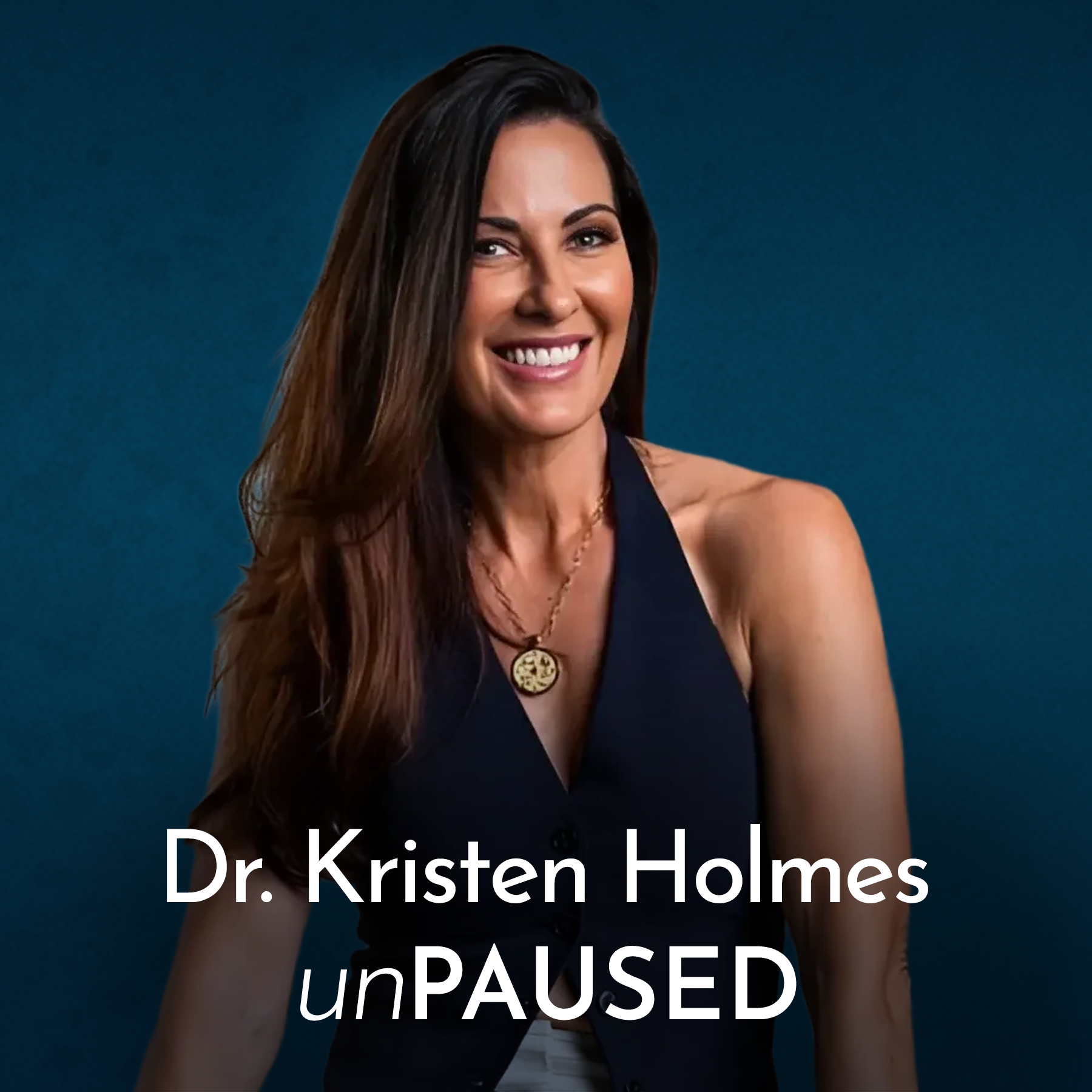
Aug 11, 2026 · 1h 8m
Why menopause turns the 3 a.m. wake-up into a circadian problem
Menopause and the 3AM Wake Up: What Light, Meal Timing and Hormones Do with Dr. Kristen Holmes
The conversation reframes menopausal sleep disruption as a whole-day interaction among light, food timing, activity, hormones, and circadian alignment.
- 1Reduced circadian amplitude, hormonal change, and weak day-night contrast can help explain recurring early-morning awakenings.
- 2Morning daylight, consistent schedules, earlier eating, daytime movement, and a cool, dark bedroom support stronger sleep foundations.
- 3Sedation does not guarantee restorative sleep, and wearable data should complement—not replace—how refreshed a person feels.
Don't miss
Holmes explains why waking around 3 a.m. may reflect weakened circadian contrast across light, activity, feeding, and fasting—not only menopause symptoms at bedtime.
The brief
Kristen Holmes joins Mary Claire Haver to connect women’s sleep during perimenopause and menopause with circadian rhythm, sleep architecture, light, food timing, exercise, and hormones.
The episode’s central argument is that sleep consistency begins on waking: morning outdoor light, daytime movement, earlier calories, and regular schedules strengthen the signals that shape nighttime recovery.
Holmes links the familiar 3 a.m. awakening to reduced circadian amplitude and insufficient contrast between activity and rest, light and darkness, and feeding and fasting.
The discussion also separates sedation from restorative sleep, emphasizing sleep depth, cycle progression, and the limits of treating wearable measurements as a substitute for feeling refreshed.
The practical prescription is deliberately broad: protect daytime light and movement, avoid late intense exercise and late eating, and make the bedroom cool, dark, and predictable.
Featuring
Mentioned
 Whoop
WhoopBooks & mentions

Aligned: The Data-Driven Guide to Performance, Recovery, and Human Potential
Holmes expands the episode’s data-driven approach to circadian health, recovery, and human performance.

The New Perimenopause
Haver’s guide provides broader context for the hormonal and health changes surrounding perimenopause.
Listen to the full episode and explore every guest, topic, and moment on PodLume.