
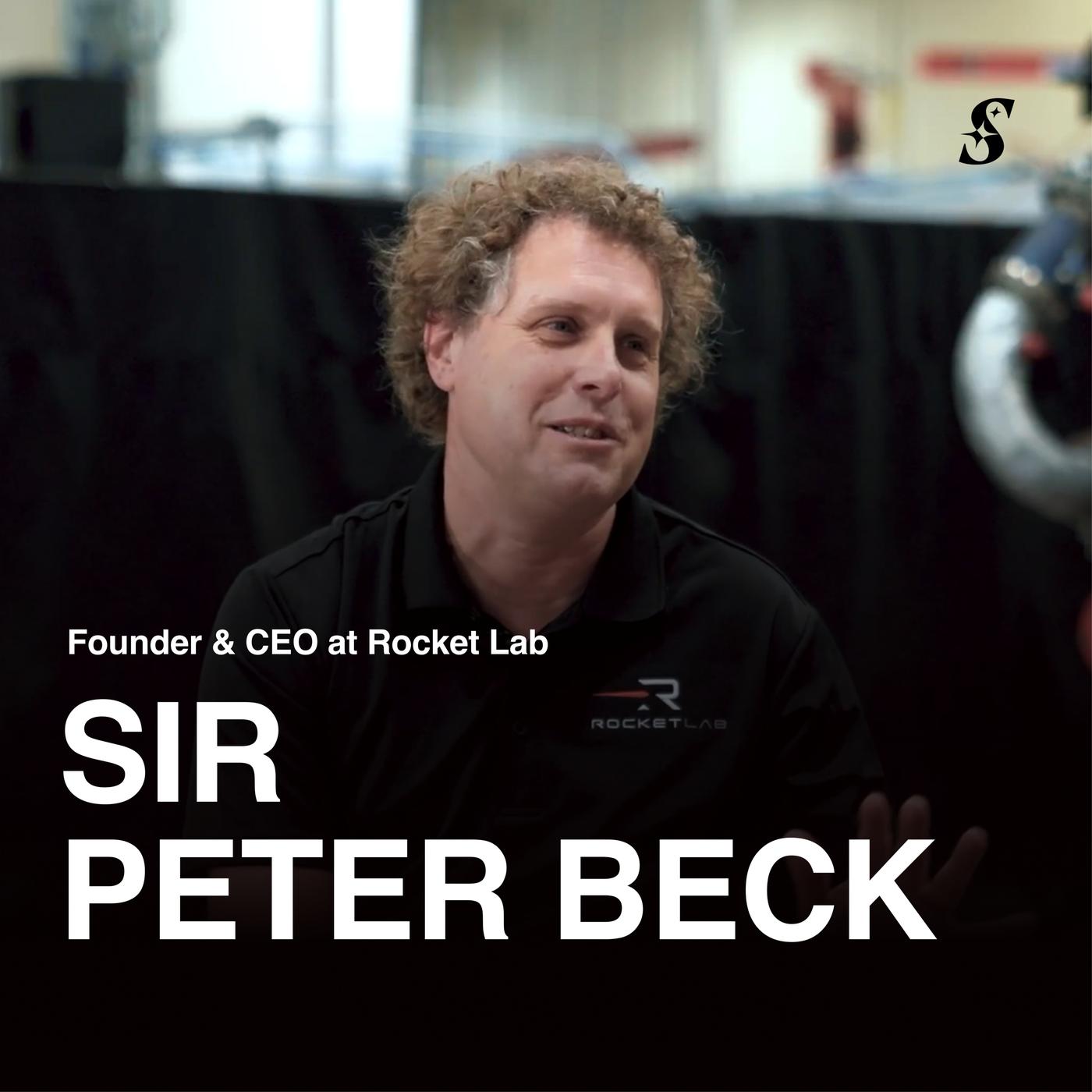
Aug 24, 2026 · 39 min
Rocket Lab CEO Peter Beck outlines vertical integration and national security strategy
Inside Rocket Lab w/ CEO Sir Peter Beck: Record Earnings, Neutron, Flatelittes
Rocket Lab's shift toward vertical integration and defense contracts provides a blueprint for how modern aerospace companies can challenge traditional launch monopolies.
- 1Acquiring key component manufacturers secures Rocket Lab's supply chain and lowers the cost of building complex satellite constellations.
- 2Launching from New Zealand provides unique geographical advantages including highly flexible launch azimuths and minimal air traffic disruption.
- 3The development of the Neutron rocket and the Archimedes engine prioritizes long-term reliability and rapid reusability over quick deployment.
Don't miss
Sir Peter Beck discusses the strategic engineering trade-offs of the Archimedes engine and the development of highly mobile launch sites for national security.
The brief
Host Molly O’Shea tours Rocket Lab's Long Beach facility with CEO Sir Peter Beck to discuss the company's record earnings and its strategic pivot from a simple launch provider into an end-to-end space systems giant.
Beck explains how acquiring key component manufacturers like Sinclair Interplanetary secured Rocket Lab's supply chain, giving them complete vertical control over critical spacecraft parts like reaction wheels and star trackers.
The conversation explores the unique geographical and regulatory advantages of launching from New Zealand, which offers unparalleled launch azimuths and quiet airspace, helping Beck build a global space footprint from scratch.
Beck details the engineering trade-offs behind the Neutron rocket and its Archimedes engine, alongside highly mobile national security projects like Ghost and the upcoming private mission to search for life on Venus.
Featuring
 Peter Beck
 Reaction wheel
Listen to the full episode and explore every guest, topic, and moment on PodLume.