
Aug 15, 2026 · 2h 7m
Physical electrical grid emerges as the ultimate bottleneck for AI expansion
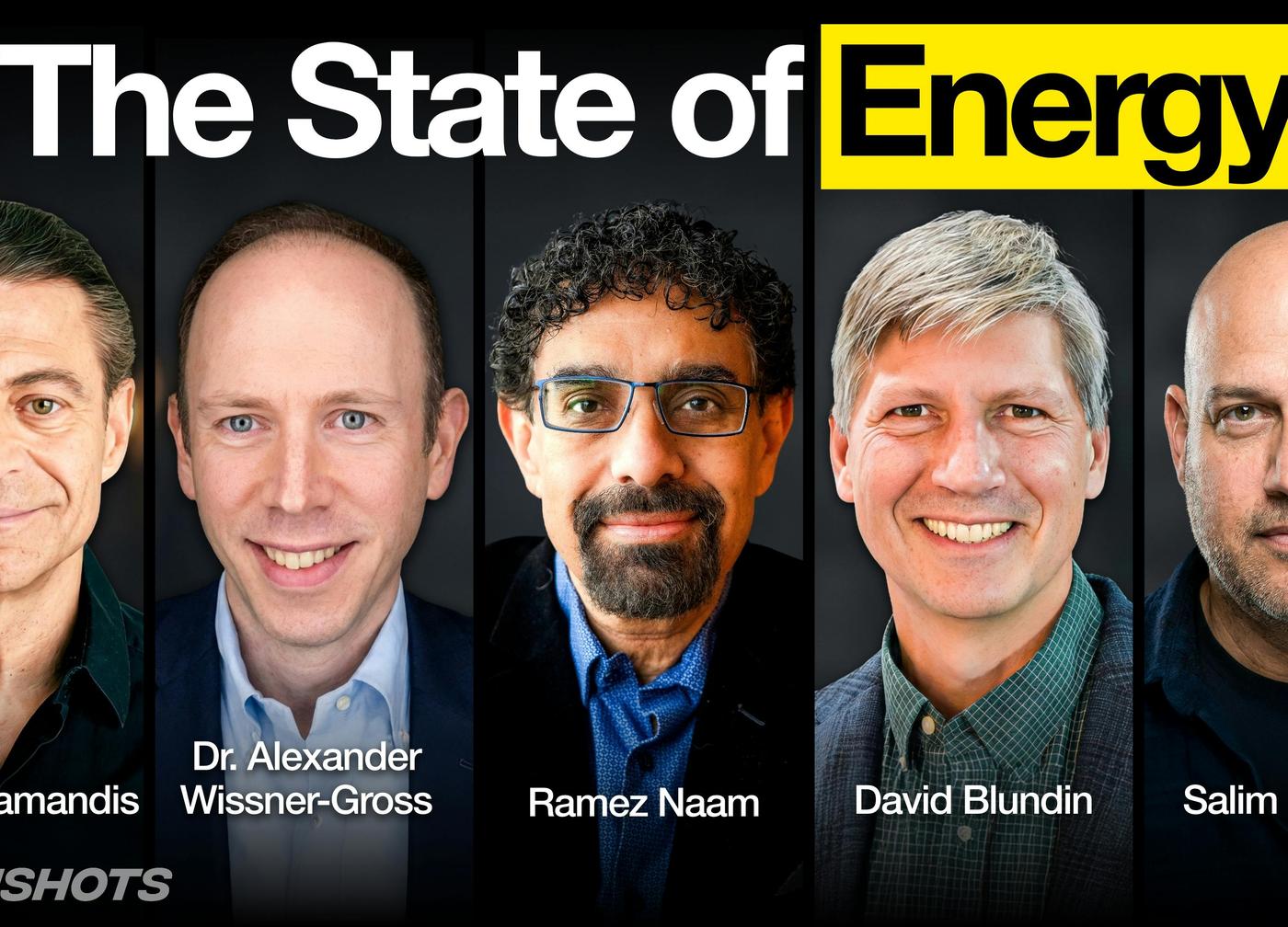
200GW Hiding in Grid, Sodium Batteries 10x Cheaper, Wave-Powered Datacenters w/ Ramez Naam | EP #280
As AI models demand unprecedented levels of compute, the bottleneck has shifted from software design to the physical limits of our energy infrastructure.
- 1Massive battery installations allow AI data centers to bypass grid constraints by shifting their power consumption to off-peak hours.
- 2A favorable regulatory shift treating fusion differently from fission has cleared a major path for private fusion startups.
- 3Future compute infrastructure may transition to unconventional environments like deep oceans for cooling and space for solar power.
Don't miss
Ramez Naam explains how a major regulatory win treating fusion differently than fission has unlocked rapid progress for private fusion companies.
The brief
The explosive growth of artificial intelligence is colliding with physical reality. While software and algorithms scale exponentially, AI data centers are hitting a massive bottleneck: the capacity and regulatory delays of the physical electrical grid.
Clean energy investor Ramez Naam argues that bypassing the grid requires creative engineering. Deploying massive battery packs can turn data centers into interruptible loads, allowing them to store power and time-shift their heavy consumption.
While solar power and battery costs continue their rapid exponential decline, seasonal winter variations mean solar alone cannot power AI year-round. This is driving a renewed focus on passive-safe nuclear fission and small modular reactors.
The private fusion sector is accelerating rapidly, aided by a crucial regulatory decision to treat fusion differently than traditional fission, clearing a massive hurdle for pioneering companies like Helion and Commonwealth Fusion Systems.
To meet future compute demands, infrastructure may move to extreme environments. Tech leaders are debating highly efficient ocean-cooled data centers and even orbital space-based solar arrays to power the next generation of intelligence.
What was said on this episode
37 statements · 24 positive · 11 negative · 1 mixed · 1 neutral
Sodium-ion batteries could reduce battery costs tenfold.
“new technologies like sodium ion batteries could drop the cost of batteries by a factor of 10”
Listen at 0:13
Battery costs will decline another tenfold.
“Batteries are plunging in cost and are going to drop another 10x.”
Listen at 0:29
Energy availability constrains AI development.
“energy is the bottleneck for AI”
Listen at 6:57
Grid transmission infrastructure is a major obstacle to new power connections.
“the poles and wires are a huge problem”
Listen at 7:52
Software-only recursive self-improvement will eventually show diminishing returns.
“Every model of RSI and software fizzles over time.”
Listen at 12:44
Recursive self-improvement is unlikely to produce an intelligence takeoff with a vertical asymptote.
“There is no mathematical model of RSI that's valid that I can see. That leads to an actual like, you know, vertical asymptote to take off.”
Listen at 12:56
Large Texas data centers requesting power now may not connect before 2031–2032.
“if you put in a request for hundreds of megawatts of power to build the data center today, good luck getting that power before 2031. 2032.”
Listen at 16:14
Grid poles and wires have not experienced exponential technological improvement.
“the poles and wires have thus far not become an exponential technology”
Listen at 19:13
Large natural-gas turbines for data centers have approximately seven-year backlogs.
“These are now sold out for something like seven years.”
Listen at 23:30
Utility compensation should reward speed of power delivery rather than only capital spending.
“Utilities, instead of just getting paid for a percentage over capex, they should be paid on things like how fast they can deliver power.”
Listen at 27:52
Flexible or interruptible loads can receive faster grid connections.
“if you can either find some alternate way to power yourself or just turn down your power at moments of peak demand will get you connected much, much faster”
Listen at 29:30
One percent annual flexibility could unlock roughly 100 gigawatts of grid capacity.
“if you can be flexible, 100 hours out of the year, four days out of the year, 1% downtime, that unlocks 100 gigawatts of capacity on the grid”
Listen at 32:28
Battery-backed load shifting will become common beyond Texas within a year.
“Twelve months from now, this will be a super common approach, not just in Texas.”
Listen at 33:58
Grid-responsive loads could support roughly five years of AI data-center growth.
“I think that's 100 gigawatts. I think that's if we're smart about it, that's the next five years of AI data center growth.”
Listen at 38:34
Sodium-ion chemistry could substantially lower battery costs relative to lithium-ion technology.
“new technologies like lithium ion has been dominant. Sodium is much more common on planet earth. And lithium. So new technologies like sodium ion batteries could drop the cost of batteries by a factor of 10.”
Listen at 39:43
Each cumulative doubling of solar deployment reduces costs by approximately 30%.
“every cumulative doubling of solar scale reduces costs by, let us say 30%.”
Listen at 43:16
Solar costs may fall four- to eightfold, not one-thousandfold, under ordinary deployment growth.
“the cost of solar might drop by a factor of four, maybe even by a factor of eight, but not by a factor of 1,000.”
Listen at 43:49
Winter seasonality, rather than cost or nighttime, is solar power’s key remaining problem.
“the problem for solar is not cost and it's not nighttime because batteries are plunging in cost and are going to drop another 10x. Ultimately it is winter.”
Listen at 52:38
Nuclear, seasonal storage, fusion, and advanced geothermal can address solar’s seasonal limitations.
“nuclear is super useful as is, you know, efforts to get seasonal storage, as are all of efforts on fusion, as is advanced geothermal”
Listen at 54:27
AI compute should be located where energy is abundant.
“Why don't we cite it where the energy is. Right. So that's one viewpoint.”
Listen at 55:19
Nuclear fission is very expensive outside leading countries because deployment volume is low.
“the core issue with nuclear fission today is that outside of China and perhaps South Korea, it is ruinously expensive. And why is it ruinously expensive? It's because we don't do a lot of it.”
Listen at 1:04:47
New nuclear fission designs are passively safe against loss of power.
“New nuclear fission designs are passive safe.”
Listen at 1:09:34
No commercial small modular reactor is expected before 2030–2031.
“I don't expect anyone to actually have a commercial small modular reactor in 2030, 2031.”
Listen at 1:15:45
Fusion energy is no longer necessarily fifty years from practical realization.
“The joke was always that fusion is 50 years in the future and always will be. That's just no longer true.”
Listen at 1:21:19
Commonwealth Fusion Systems plans a fusion reactor reaching break-even at roughly 600 megawatts.
“instead of a 5 gigawatt reactor being necessary to be break even, they can do it in like 600 megawatts is their plan.”
Listen at 1:24:13
Helion aims to provide Microsoft 50 megawatts of fusion power in 2028.
“The most aggressive timeline is Helion. They have a power purchase agreement from Microsoft to provide 50 megawatts of power. So very small. And again, the smaller you can build, the more modular it is when we get those learning rates in 2028.”
Listen at 1:28:04
Fusion reactions shut down without catastrophic consequences when reactor operation fails.
“with fusion if like if you mess something up up in the reactor, it just like goes, it just like fails and nothing bad happens.”
Listen at 1:31:40
Fusion companies may fail technically or succeed without achieving economical power.
“all of these companies might fail, they might 100% fail and in addition to that, they might succeed but be too expensive.”
Listen at 1:32:53
Proton–boron-11 fuel could potentially enable nuclear power costing one to three cents per kilowatt-hour.
“PB11 is one of the ways that you can. One of the fuels you can use to potentially get a nuclear reactor that is down to the like 1, 2, 3 cents kilowatt hour.”
Listen at 1:36:21
Space-based AI becomes cost-competitive if launch costs fall four- to tenfold.
“AI in space, it becomes cost competitive. When you get down to a launch cost that is, you know, something like four times to 10 times cheaper than what we have today.”
Listen at 1:41:05
Space is likely to host most compute if compute demand remains effectively unlimited.
“Space is the obvious place if the demand for compute is truly unbounded.”
Listen at 1:48:32
Compute demand will rise sharply before reaching a saturation point tied to economic needs.
“my guess is we're on an S curve right now. We're going to see a huge demand and then we're going to see, we're going to hit to some point of satisficing”
Listen at 1:50:00
Current AI is better understood as a tool than as an autonomous, volitional being.
“I do not see AI as a being and I do not see it as particularly volitional. I see it as a tool.”
Listen at 1:50:31
Wave-powered ocean data centers could eventually produce electricity at about two cents per kilowatt-hour.
“So they can get their power down to like we think 2 cents a kilowatt hour. Ultra cheap.”
Listen at 1:56:08
Advanced geothermal technologies could provide inexpensive power far beyond geological hotspots.
“Those open up the possibility of getting cheap geothermal power anywhere instead of just only near hot spots in the Earth's crust”
Listen at 1:58:16
Future algorithmic discoveries could substantially improve AI energy efficiency.
“there are algorithmic discoveries waiting to be made”
Listen at 2:00:23
Digital intelligence can eventually surpass human intelligence.
“I believe fully that digital intelligence, there's every reason to believe that it can surpass us”
Listen at 2:02:45
Statements are attributed to the speaker as said on the episode and reflect their view at the time, not PodLume's. They are not advice.
What people are saying
The grid, not generation, emerges as AI’s immediate energy bottleneck
Episode reactions
- Listeners praised the episode as unusually substantive and intellectually stimulating, with Ramez Naam’s energy analysis drawing particular attention.
- The central takeaway resonating most: AI’s near-term power constraint is delivering electricity through the grid, not simply generating it.
- A pointed side debate challenged whether the episode presented solar-and-battery economics too favorably compared with nuclear.
- The closing discussion was described as especially charged, with several listeners enthusiastic about the episode’s rapid-fire futurist perspective.
Wider topic conversation
- Discussion focused on long interconnection queues, with large data centers potentially waiting years for hundreds of megawatts.
- The wider energy debate contrasted solar-plus-storage replacement cycles with nuclear’s longer operating life and capital economics.
- Sodium batteries, wave-powered data centers, fusion, and rapidly expanding AI demand sparked broader speculation about future energy abundance.
Featuring
 Ramez Naam
 Peter H. Diamandis
 AI data centers
 Electrical grid
 nuclear power plants
Books & mentions

Listen to the full episode and explore every guest, topic, and moment on PodLume.