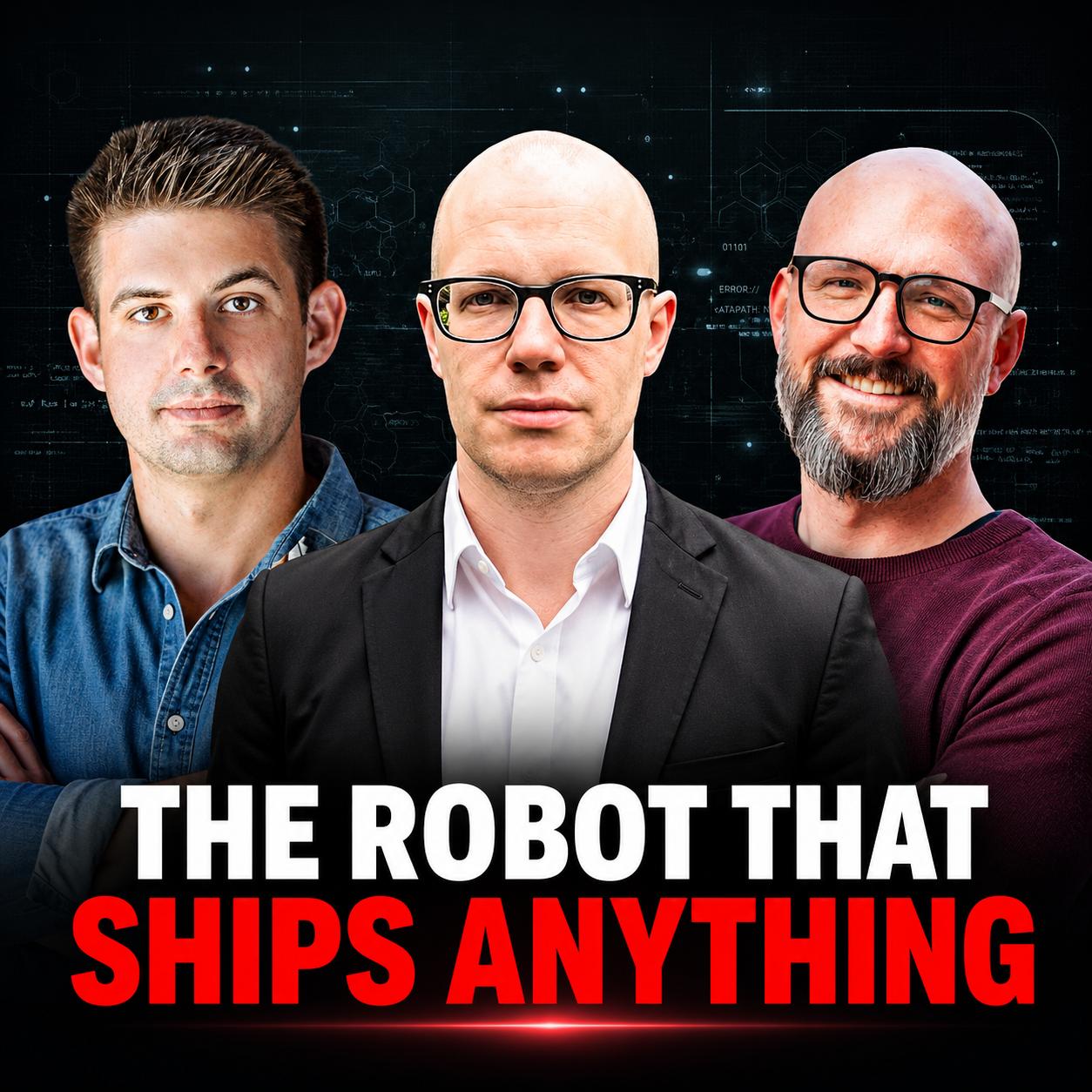
Matthias Hofmann
Person
Matthias Hofmann is an entrepreneur and technology innovator who appeared as a guest on the podcast 'This Week in Startups'. He is focused on developing advanced robotics designed to significantly reduce delivery costs.
What Matthias Hofmann has said on podcasts
16 statements
IBOT tests vision in 90 seconds and enables a teledoctor to issue prescriptions within minutes.
“The whole thing only takes about 90 seconds. And then within that time, you know, you punch in your. After you do the test, you punch in your name, information, email, and then it goes. All that information that gets packaged, goes to the cloud and gets paired with one of our teledoctors, who then review that session and then write a script to your eyes. So you can essentially get an eyeglass prescription within minutes.”
Open the episode · These robots could cut delivery costs by 80% | Next UnicornsListen at 32:06
Comprehensive eye exams can diagnose diabetes.
“you can diagnose diabetes actually through a comprehensive eye exam”
Open the episode · These robots could cut delivery costs by 80% | Next UnicornsListen at 34:37
IBOT targets users who need prescriptions rather than comprehensive eye-health examinations.
“all you need is a pair of new glasses or contact lenses, which for that you only need an eyeglass prescription. And that's really where IBOT today comes in.”
Open the episode · These robots could cut delivery costs by 80% | Next UnicornsListen at 35:43
An IBOT prescription costs between zero and $25.
“So it's anywhere between 0 to $25.”
Open the episode · These robots could cut delivery costs by 80% | Next UnicornsListen at 37:18
IBOT can equalize vision-prescription access regardless of insurance status.
“IBOT is here to really level the playing field.”
Open the episode · These robots could cut delivery costs by 80% | Next UnicornsListen at 39:37
IBOT uses ophthalmologists and optometrists licensed in the states where they prescribe.
“we have our ophthalmologists and we have our optometrists and yeah, they get queued in depending on which state it is and obviously they're all licensed in the state that they work in and prescribe in”
Open the episode · These robots could cut delivery costs by 80% | Next UnicornsListen at 40:45
Children are 80% more myopic than they were 20 years ago.
“our kids are 80% more myopic than they were 20 years ago”
Open the episode · These robots could cut delivery costs by 80% | Next UnicornsListen at 43:34
The United States may have 20–30% fewer ophthalmologists within ten years.
“The ophthalmology is projected to have 20 to 30% fewer ophthalmologists in 10 years.”
Open the episode · These robots could cut delivery costs by 80% | Next UnicornsListen at 44:22
Automating healthcare is necessary to meet current and future demand.
“the only way to meet the demand of today and even into the future is that we need to automate healthcare”
Open the episode · These robots could cut delivery costs by 80% | Next UnicornsListen at 45:05
IBOT incorporates advanced autorefraction and visual-acuity technologies.
“we have a very advanced auto refraction technology. We have a very advanced visual acuity system”
Open the episode · These robots could cut delivery costs by 80% | Next UnicornsListen at 46:09
IBOT prescriptions have substantially lower remake rates than the industry average.
“we also have extremely low remake rates. Remake rate is, you know, how often do people go back and say, hey, I want this prescription changed. I don't like it. Yeah, we beat the industry average by a considerable amount.”
Open the episode · These robots could cut delivery costs by 80% | Next UnicornsListen at 53:10
About 1.5 billion people currently have impaired vision correctable with glasses.
“1.5 billion humans on this planet right now are not seeing well. And all they need is a pair of glasses.”
Open the episode · These robots could cut delivery costs by 80% | Next UnicornsListen at 54:54
Most general-purpose eyeglasses cost less than $20 to manufacture.
“in general, most pairs of eyeglasses cost less than 20 bucks to make. All in.”
Open the episode · These robots could cut delivery costs by 80% | Next UnicornsListen at 56:05
Eyeglasses should be commoditized, but prescription access remains a bottleneck that automation will address.
“This should be unbelievably commoditized. Yes. And it's not. And the big bottleneck, that's where we're stuck as a humanity is, as a species is like getting to the numbers to getting those, those glasses. And that is the next piece that is getting automated.”
Open the episode · These robots could cut delivery costs by 80% | Next UnicornsListen at 56:43
Doctors should remain involved because writing high-quality eyeglass prescriptions requires science and experience.
“doctors need to be in the loop. And as it turns out that in our case, writing great eyeglass prescriptions is. Not many people know this, but it is science and also art.”
Open the episode · These robots could cut delivery costs by 80% | Next UnicornsListen at 57:47
IBOT doctors review every vision-testing session like a clinic encounter.
“we're going to have, you know, doctors. We have doctors review every session and deal with every session the same way it happens in a clinic.”
Open the episode · These robots could cut delivery costs by 80% | Next UnicornsListen at 59:19
Statements are attributed to the speaker as said on the episode and reflect their view at the time, not PodLume's. They are not advice.