
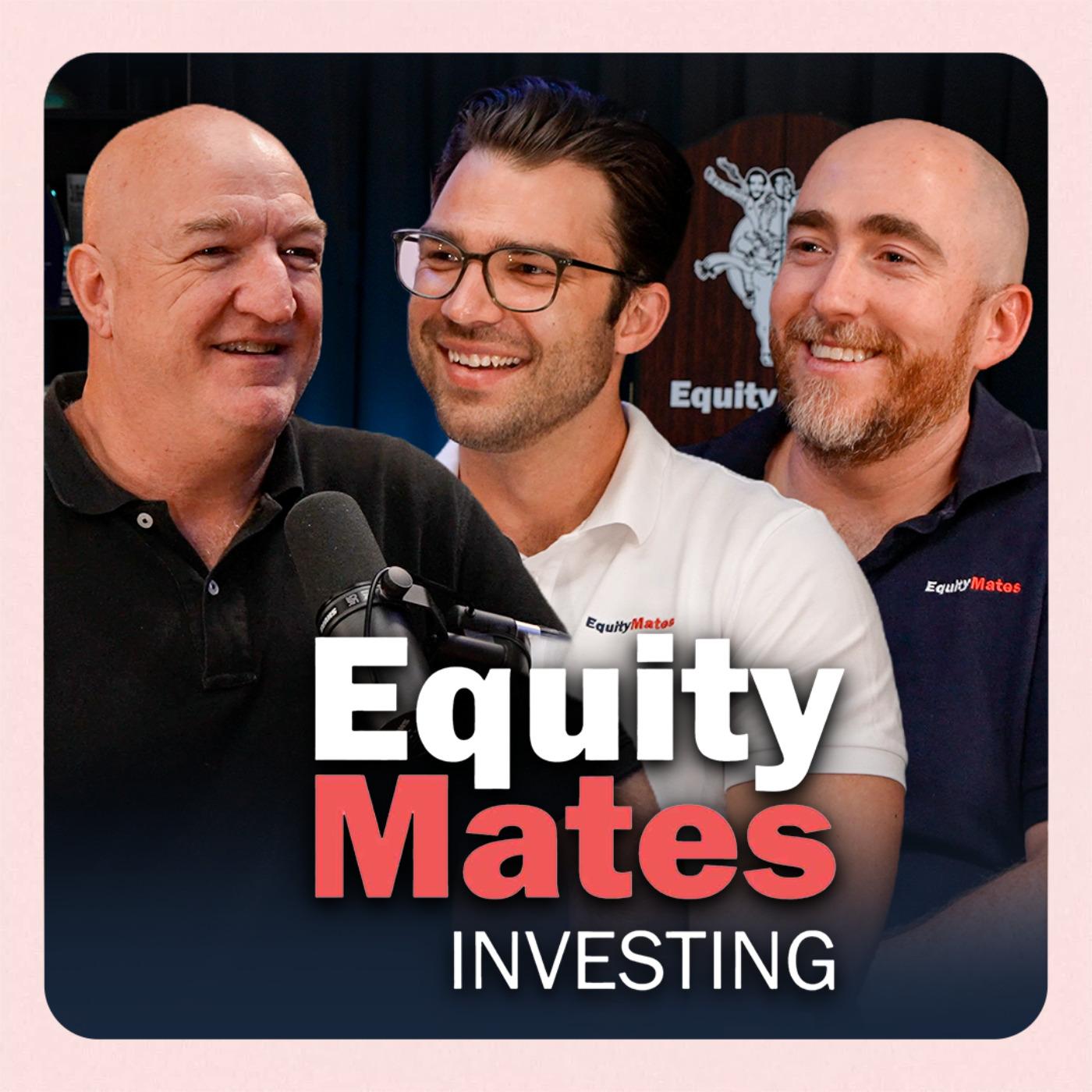
Sep 28, 2026 · 50 min
Scott Phillips makes the case for boring investing
Scott Phillips: The stock picker who doesn’t think you should pick stocks
The episode tests whether simple, diversified investing can outperform the emotional pull of stock picking, property speculation, and market timing.
- 1Most investors benefit from diversified ETFs, regular contributions, and a written plan rather than individual stock picking.
- 2A personal investing purpose and emergency buffer can make disciplined contributions easier to sustain through uncertainty.
- 3Thematic and leveraged ETFs may look compelling, but valuation, concentration, and magnified losses demand careful scrutiny.
Don't miss
Scott Phillips explains why staying invested through crashes and continuing regular contributions can matter more than predicting the next downturn.
The brief
Scott Phillips, Chief Investment Officer at The Motley Fool Australia, explains why his stock-picking career leads him to recommend diversified ETFs for most investors.
His one-page plan starts with purpose: moving beyond “make money” toward freedom, less money stress, family support, or an income stream that keeps pace with inflation.
The practical framework is deliberately unglamorous: build emergency savings, start with a manageable contribution, and use dollar-cost averaging instead of waiting for perfect certainty.
Scott’s five-part test for thematic ETFs asks whether a trend is real, durable, profitable, properly represented, and attractively valued; many fail before the final question.
On crashes, his message is blunt: no one reliably knows what comes next, and waiting for a better entry can mean missing the recovery as well as avoiding the fall.
The episode’s central tension is between investing’s intellectual complexity and its behavioral reality: a simple plan is useful precisely when markets make it hardest to follow.
What was said on this episode
41 statements · 25 positive · 14 negative · 1 mixed · 1 neutral
A market crash will occur.
“There's a crash coming.”
Listen at 1:18
A market crash will occur.
“There's a crash coming. Of course there is.”
Listen at 1:18
Most people should avoid buying individual shares.
“Most people shouldn't be buying shares individually.”
Listen at 1:21
Property is not particularly attractive as an investment.
“I don't think property as an investment is particularly attractive.”
Listen at 1:23
Invest despite uncertainty about near-term market movements.
“Invest anyway, because I don't know what happens next.”
Listen at 1:34
Human evolutionary biology makes investing behavior difficult.
“Humans aren't built to invest biologically.”
Listen at 5:06
Most people should avoid individual shares and SMSFs.
“Most people shouldn't be buying shares individually and most people shouldn't have SMSFs.”
Listen at 9:20
Most people should default to diversified ETFs.
“the default should be ETFs for most people”
Listen at 10:18
Poor stock picking leaves investors worse off.
“if you pick stocks badly, you'll be worse off.”
Listen at 10:55
Investors unable or unwilling to pick stocks should buy ETFs instead.
“if you can't do it, you don't want to do it, you're not very good at it, then buy an ETF and go fishing 100% every day.”
Listen at 11:08
Money stress is the largest contributor to relationship breakdowns.
“money stress is the largest contributor to relationship breakdowns.”
Listen at 13:39
Scott and his wife aim to replace employment income through investments.
“we want to replace our incomes”
Listen at 16:32
Productivity growth has generated substantial prosperity and wealth.
“we've generated massive amounts of prosperity and wealth because we've been more productive.”
Listen at 18:34
Human ingenuity and productivity have not peaked and will continue rising.
“No, of course we haven't. We are going up.”
Listen at 19:44
New solutions to problems will create economic value.
“we will create value doing that.”
Listen at 20:43
Large listed companies are likely to capture future technology-driven value.
“that's likely to be predominantly captured by large companies listed on stock markets around the world.”
Listen at 20:45
Regular investing helps investors avoid market timing.
“You can avoid trying to time the market.”
Listen at 22:45
An emergency fund is more important than investing.
“More important than investing is having that emergency fund”
Listen at 24:25
People should build an emergency fund before investing.
“I still would build the emergency fund.”
Listen at 24:57
Consistent basic financial habits are generally sufficient over time.
“Do the simple things reasonably well most of the time for a long enough period of time.”
Listen at 26:32
Most people can improve financially using basic investing guidance without planners.
“95% of us should be able to grab my book or any decent— listen to a great podcast called Equity Mates and take the lessons from that and do them and be better off.”
Listen at 27:24
Shares are likely to provide greater benefits than other asset classes.
“the benefits of shares to my mind far outweigh the likely future benefits of other asset classes.”
Listen at 28:35
Equities will deliver better returns than alternatives.
“I think equities will deliver better returns.”
Listen at 29:07
Investors should generally start with equities.
“for me, I don't know why you would start anywhere else personally”
Listen at 29:22
Most thematic ETFs fail the five-step evaluation test.
“Most of them.”
Listen at 30:29
ASX thematic ETFs provide access to overseas companies unavailable locally.
“buying a thematic ETF on the ASX is a great way to get access to those companies if you want them.”
Listen at 31:40
A real trend alone does not justify buying its ETF.
“The trend is real, therefore I should buy the ETF.”
Listen at 31:52
Property is not particularly attractive as an investment.
“I don't think property as an investment's particularly attractive.”
Listen at 34:02
A home is highly valuable as shelter and a place to live.
“property to live in, to have your life in a shelter, super valuable.”
Listen at 34:06
Australian median house prices rose about 6.56% annually over 30 years.
“Over the last 30 years, property's gone up at 6.56%, I think it is a year”
Listen at 34:34
Australian wages rose 4% over the same 30-year period.
“Wages have gone up 4% over that period of time.”
Listen at 34:42
Property price growth must eventually converge with wage growth.
“prices must— the growth in prices must converge with growth in wages.”
Listen at 36:14
Listed company profits and share prices have higher long-term growth potential than property.
“The ceiling on listed company profits and therefore listed company share prices is far higher in long-term average growth than property almost entirely.”
Listen at 37:35
Leverage magnifies both investment gains and losses.
“Leverage magnifies gains and losses.”
Listen at 38:57
Leveraged ETFs should generally be avoided at average or high market levels.
“Would I want to get into a leveraged ETF at an average market level or higher? Probably not”
Listen at 39:09
Leveraged ETFs magnify investment risk.
“I don't mind leveraged ETFs as a concept, but they do magnify the risk”
Listen at 40:21
Leveraged ETFs encourage risky short-term behavior among most users.
“most people are going to use them for a quick buck and it encourages the behaviour.”
Listen at 40:27
Most apparently bad investment entry points over 30 years were not actually bad.
“almost every point in the last 30 years that looked like a bad time to invest wasn't a bad time to invest.”
Listen at 43:55
Long-term compounding creates substantial wealth.
“the long-term story is that compound wealth creation is phenomenally powerful.”
Listen at 45:14
$10,000 grew to $130,000 over the last 30 years.
“$10,000 to $130,000 over the last 30 years.”
Listen at 45:20
Staying invested through the crisis multiplied investors’ money two- or threefold.
“if you just stayed the course, you made 2 or 3 times your money.”
Listen at 47:11
Statements are attributed to the speaker as said on the episode and reflect their view at the time, not PodLume's. They are not advice.
Featuring
 The Motley Fool
Mentioned
 The One Page Investing Plan
Books & mentions

Listen to the full episode and explore every guest, topic, and moment on PodLume.