
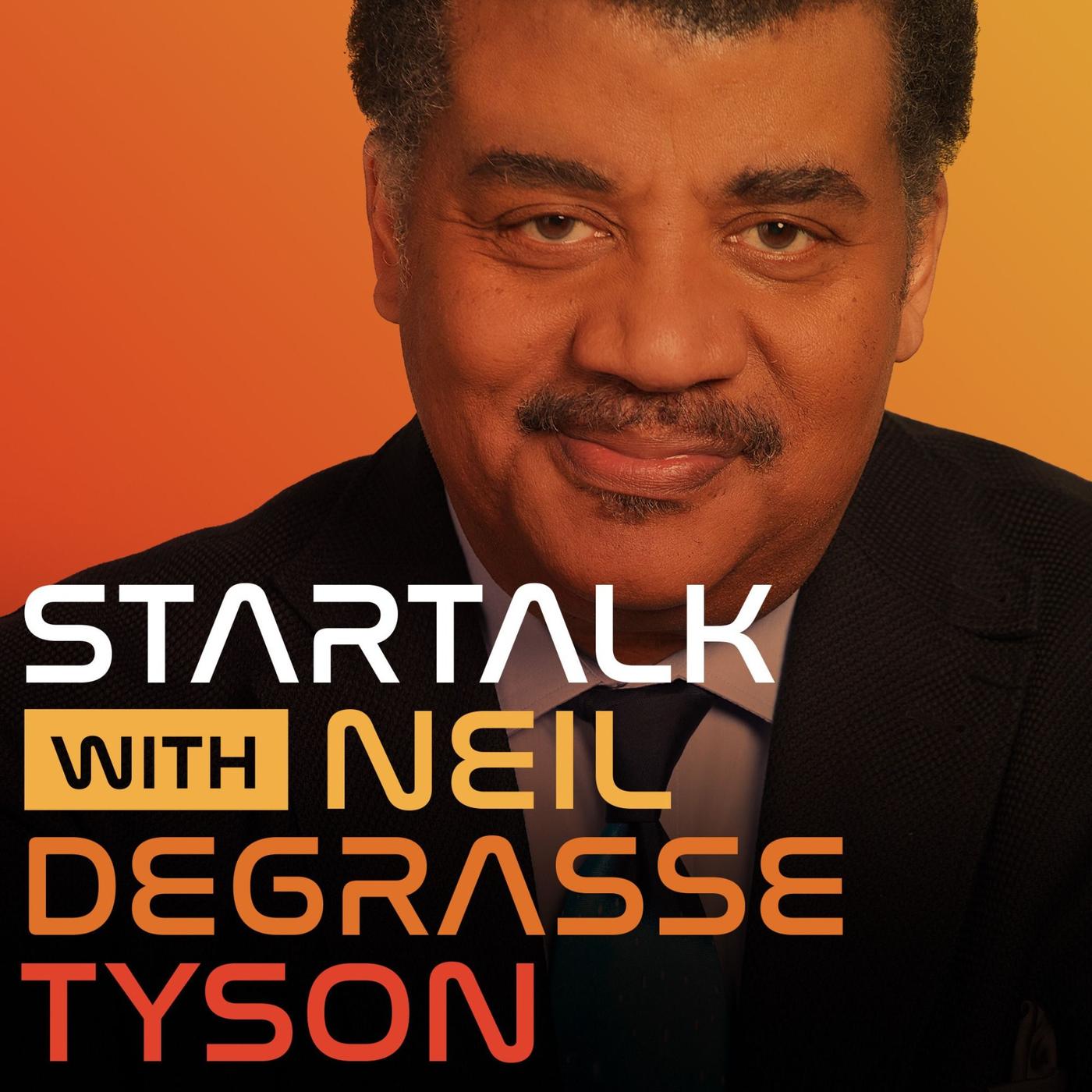
Aug 25, 2026 · 50 min
Roman telescope tests dark energy and searches for new physics
The Hunt for Dark Energy with Jason Rhodes
Independent measurements from Roman and Euclid could clarify whether cosmic acceleration reflects evolving dark energy, modified gravity, or gaps in current physics.
- 1Roman will map vast galaxy samples to measure dark energy while using lensing and clustering to trace dark matter.
- 2Its coronagraph and microlensing surveys will probe exoplanets, including distant and rogue worlds that other methods can miss.
- 3Comparing Roman with Euclid could expose instrumental biases and strengthen evidence for changes in cosmology.
Don't miss
Rhodes explains that Roman’s directly imaged exoplanets may appear as single pixels, yet brightness changes and atmospheric signatures could still reveal their properties.
The brief
Jason Rhodes joins Neil deGrasse Tyson and Paul Mecurio to explain how NASA’s Nancy Grace Roman Space Telescope will investigate cosmic acceleration, dark matter, exoplanets, and the possibility of new physics.
Roman’s wide-field surveys will measure enormous galaxy samples, using clustering and gravitational lensing to map dark matter and separate its influence from whatever drives the universe’s accelerating expansion.
The episode frames the Hubble tension and evolving dark energy as tests of the underlying model, while stressing that independent observations are essential for distinguishing discovery from systematic error.
Roman’s exoplanet program combines direct imaging with microlensing, a method capable of finding small, distant, and rogue planets that transit surveys often overlook.
Roman and Euclid will survey the cosmos differently, allowing researchers to cross-check instruments and methods before claiming that cosmology has uncovered a fundamental crack.
Featuring
 Jason Rhodes
 Paul Mercurio
 Euclid
 Lagrange point
Listen to the full episode and explore every guest, topic, and moment on PodLume.