
Sep 21, 2026 · 2h 47m
Rick Rubin argues conviction—not metrics—makes lasting art
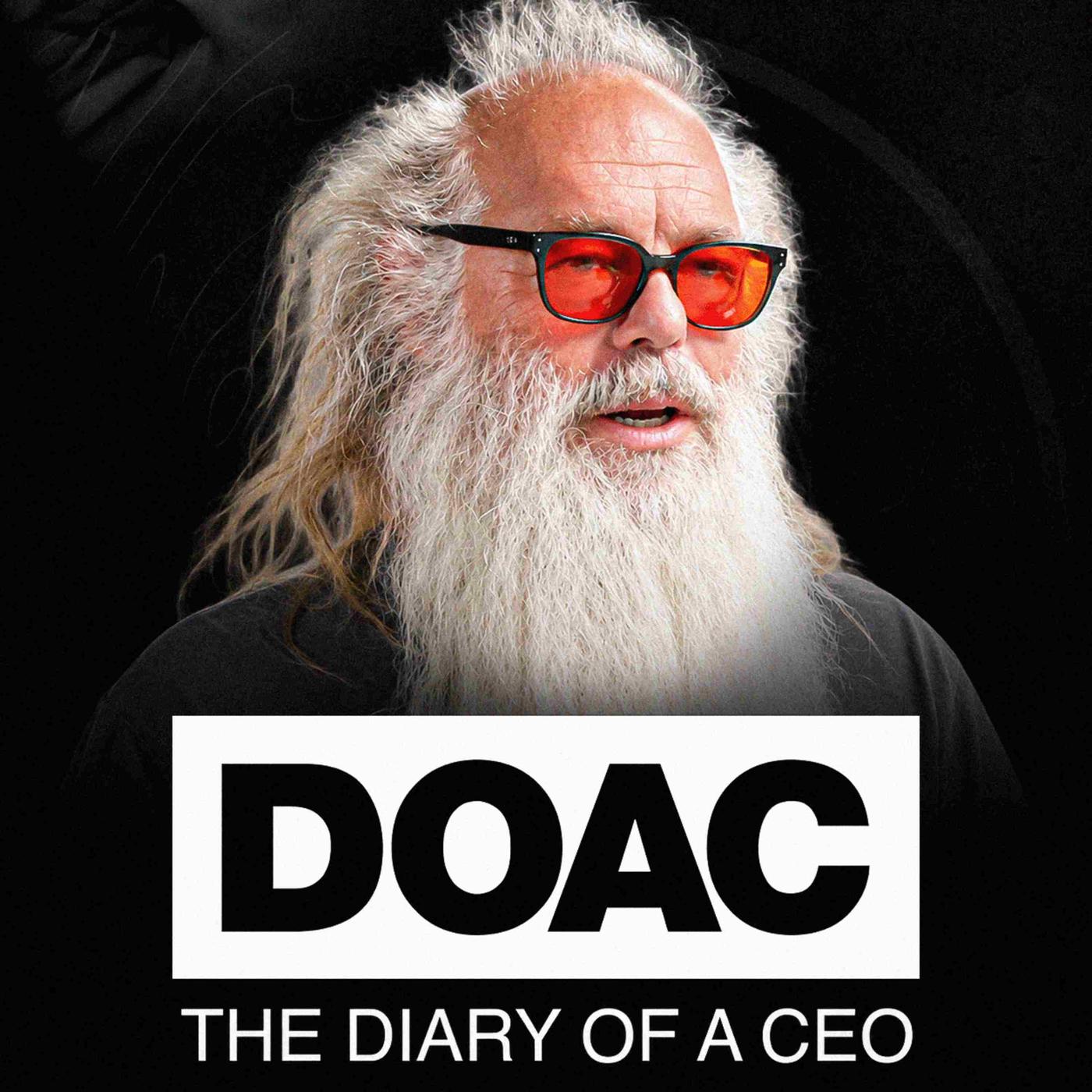
Rick Rubin: What Jay-Z Did in 30 Minutes Left Me Speechless!
Rick Rubin makes the case that meaningful creative work depends on protecting intuition from labels, commercial pressure, and inherited expectations.
- 1Exceptional work begins with personal conviction, even when risk and uncertainty make commercial success impossible to predict.
- 2Creative freedom requires patience, self-examination, and sometimes quitting commitments that have become dangerously misaligned.
- 3AI can recombine material at scale, but Rubin argues that human art still depends on perspective, intention, and lived meaning.
Don't miss
Rubin recounts how 99 Problems came together with Jay-Z, including the track’s unlikely beginnings and the label’s initial skepticism.
The brief
Rick Rubin says artists do their best work when they reject restrictive labels and follow ideas that feel personally meaningful, even when those ideas seem commercially indefensible.
His Jay-Z stories make the argument concrete: 99 Problems was initially underestimated by label executives, while Jay-Z’s unusual writing process shows there is no universal creative method.
Rubin links creative freedom to practical choices, including leaving destructive commitments, separating income from artistic independence, and examining which ambitions actually belong to you.
Meditation, therapy, Taoism, and a depressive episode all inform Rubin’s belief that intuition is not a shortcut but a form of sustained self-examination and attention.
On AI, Rubin sees powerful utility but questions whether recombination can become art without an individual point of view; for him, the repeatable practice is showing up and listening.
The conversation ends with creativity as an offering rather than a product, a principle Rubin connects to integrity, family, and the freedom to make work without outsourcing its value to metrics.
What was said on this episode
63 statements · 37 positive · 16 negative · 1 mixed · 9 neutral
Institutions suppress creativity by conditioning people to follow rules.
“creativity is beaten out of us over the course of our lives”
Listen at 1:05
The best creative outcomes require taking risks.
“all of the best things involve risk”
Listen at 1:22
Extreme, indefensible choices may be necessary for meaningful art.
“in making art, indefensible is actually a good thing. Maybe not only a good thing, maybe a necessary thing.”
Listen at 4:25
Personal and professional labels restrict people.
“Any label that you put on yourself or that's put on you makes you smaller.”
Listen at 9:03
Optimizing art for universal approval produces less challenging work.
“If you make something where you think this is for everyone or they're going to love it, it's like, uh, it's too easy.”
Listen at 9:58
Rubin’s creative process rejects near-term commercial incentives.
“We never consider near-term incentive ever at any point in time.”
Listen at 12:05
Rubin prioritizes enduring work over short-term commercial performance.
“We're making things forever.”
Listen at 12:15
The rap-rock genre was declining over the long term.
“long-term, The genre was dying.”
Listen at 14:54
Rubin consistently chooses personal artistic preference over safer creative options.
“I have always taken the risk. I've always made my favorite thing.”
Listen at 16:12
99 Problems gained substantial impact despite initially sounding unlike radio music.
“So when it eventually got on the radio, it had a big impact.”
Listen at 19:11
System of a Down’s song Sugar became the station’s top requested song within a year.
“One year later, number one song on the station, most requested.”
Listen at 19:58
Transcendental Meditation substantially changed Rubin’s life.
“It changed me.”
Listen at 21:14
Rubin recommends practicing Transcendental Meditation at least daily.
“20 minutes, at least once a day, typically twice a day.”
Listen at 23:50
Work that personally inspires creators is likely to retain greater long-term value.
“long-term, chances are the one that lights you up is going to have more value to you”
Listen at 31:27
Everyone possesses creative capacity, even if they do not exercise it.
“We're all creative.”
Listen at 32:16
People can improve at activities through training, even without elite potential.
“I know that I could get better at baseball.”
Listen at 33:19
Kanye West and Drake should not be evaluated as direct artistic competitors.
“There's no competition there. They do two totally different things.”
Listen at 34:46
Rubin sets deadlines only after a creative project’s direction is established.
“The first time we would ever establish a deadline is when we already know we've cracked the code.”
Listen at 36:22
Creative or business ideas may require decades before becoming successful.
“sometimes you build it and it doesn't work for 20 years, and then it becomes Amazon.”
Listen at 37:54
People pursuing creative ambitions may need separate employment for financial stability.
“you may want to have an actual job to pay the bills while you're doing that.”
Listen at 41:55
Financial pressure can degrade creative decision-making.
“Don't put the pressure of that on your art, because then you won't make the best decisions.”
Listen at 43:45
Rubin coaches by clarifying artists’ goals and supporting their chosen process.
“I ask, what do you hope to accomplish? And then I'd support that process.”
Listen at 44:21
Most people lack confidence in their own judgment because of social conditioning.
“Most people don't trust themselves.”
Listen at 46:53
Venture investors may prioritize the founder over the business premise.
“if I believe in the person, I'll back them.”
Listen at 48:59
Rubin evaluates promising creative ideas through intuition rather than explicit analysis.
“There is no knowing. It's a knowingness.”
Listen at 51:15
Rubin does not set goals in his own life.
“None.”
Listen at 51:44
Long-term plans and fixed goals can unnecessarily constrain people.
“It seems like a terrible limitation.”
Listen at 53:38
Leaving destructive jobs or relationships can be justified when commitments become harmful.
“It's okay to hit the reset button”
Listen at 1:04:24
Rubin does not make creative decisions primarily for financial gain.
“I never make a decision for a financial reason.”
Listen at 1:07:28
Leaving the destabilizing company resolved Rubin’s professional crisis.
“I ended up leaving the company, starting a relationship with a new company. Everything was fine.”
Listen at 1:10:03
Rubin used antidepressant medication during a prolonged depressive episode.
“ended up using an antidepressant drug”
Listen at 1:11:45
Talent without sustained work ethic is unlikely to reach an audience.
“if you don't have the work ethic to go with it, it's unlikely that anyone will ever hear what you do.”
Listen at 1:16:43
Exposure to museums, literature, and films can broaden creative perspective.
“I would say start going to museums.”
Listen at 1:17:49
Rubin recommends prioritizing older books for creative and intellectual development.
“I would also recommend reading old books as opposed to new books.”
Listen at 1:18:53
Most urgent problems may resolve without intervention if deferred for two weeks.
“99% of the problems that need your immediate attention in 2 weeks will resolve themselves.”
Listen at 1:20:49
Scientific understanding is provisional and may be overturned by future breakthroughs.
“that science is the understanding of how things are now until the next scientific breakthrough comes and negates everything that was before it.”
Listen at 1:22:33
Neglecting self-trust may weaken intuitive judgment.
“if you spend so much time not trusting yourself, then that antenna to be able to tell what's going on might be a little rusty.”
Listen at 1:24:25
Rubin believes a generative intelligence or force underlies life and creativity.
“I think there's a higher creative intelligence”
Listen at 1:25:18
Rational analysis is insufficient for understanding the world.
“rationality is overrated.”
Listen at 1:26:49
Artificial intelligence is an extremely powerful tool with beneficial and harmful uses.
“it's a wildly powerful tool, and I'm curious to see what it can do.”
Listen at 1:28:37
AI lacks an individual perspective central to human creativity.
“AI doesn't have a point of view.”
Listen at 1:29:37
Generative AI could produce useful musical material through large-scale output.
“it could make 10,000 tracks and you might like one or two of them, or you may like 5% of them.”
Listen at 1:30:20
Rubin doubts AI will replace artists end to end.
“The idea of it doing the end-to-end of replacing the artist, I don't think it— I can't imagine it doing that.”
Listen at 1:30:58
Creative value in AI-assisted work primarily resides in the human prompt or idea.
“The prompt is where the creativity is.”
Listen at 1:34:16
Increasing the amount of good art through AI would be beneficial.
“more good art doesn't seem like a bad thing.”
Listen at 1:35:55
Artistic value resides primarily in the originating idea rather than execution alone.
“The art's always in the ideation.”
Listen at 1:38:02
Consistent creative progress requires repeatedly showing up and persisting.
“the thing that's repeatable is you show up and you keep going until it's great, whatever it takes.”
Listen at 1:44:05
Commercial speculation can undermine and should be kept away from creative work.
“The creative process is a pure, delicate process to be Protected.”
Listen at 1:47:49
Rubin frames artistic creation as an offering to God rather than a metrics exercise.
“we're making it as an offering to God.”
Listen at 1:48:38
Rubin believes human purpose is self-expression.
“Our purpose is to self-express.”
Listen at 1:52:23
Jay-Z’s principled rejection of Cristal preceded an opportunity to own Ace of Spades.
“Jay did the right thing, and in response for doing the right thing, he ended up owning a champagne brand.”
Listen at 1:57:14
Commercial success depends on factors beyond artistic talent.
“becoming successful has so much to do with other things beyond being talented.”
Listen at 2:05:40
No universal creative process works for every artist.
“there's never a right way.”
Listen at 2:09:29
Artists should rely on an internal compass rather than copy others’ methods.
“It has to do with you. How you see it.”
Listen at 2:10:28
Kanye West is unusually fearless in both art and life.
“He's totally fearless always.”
Listen at 2:17:41
Creative risk and artistic success are closely linked.
“I think the risk and the success go hand in hand.”
Listen at 2:18:15
Everyone can develop into the best version of themselves.
“we all have potential to be the greatest version of ourselves.”
Listen at 2:20:03
Athletes who train during the offseason are generally better and have longer careers.
“the ones who train in the offseason are usually better and usually have a longer career.”
Listen at 2:22:31
Delaying an artistic release generally increases its difficulty.
“I think the longer you wait, the harder it gets in general.”
Listen at 2:28:09
Adele consistently delivers strong vocal performances across repeated takes.
“She'll sing a song 30 times in a row, and it'll be great 30 times.”
Listen at 2:29:20
Adele’s songwriting contributes to the personal quality of her music.
“Adele, a key piece is that it always comes from her.”
Listen at 2:30:18
Rubin recommends authenticity, sustained effort, persistence, and avoiding quitting.
“Be true to yourself. Work hard. Never give up. Don't quit. And just keep going.”
Listen at 2:30:57
Great artists retain childlike wonder toward seemingly ordinary things.
“the perspective of a great artist”
Listen at 2:44:56
Statements are attributed to the speaker as said on the episode and reflect their view at the time, not PodLume's. They are not advice.
Featuring
 Rick Rubin
 Johnny Cash
 The Creative Act: A Way of Being
 Tom Petty
Books & mentions
Listen to the full episode and explore every guest, topic, and moment on PodLume.