
Aug 28, 2026 · 1h 50m
Psychiatric prescribing faces scrutiny in Clancy case
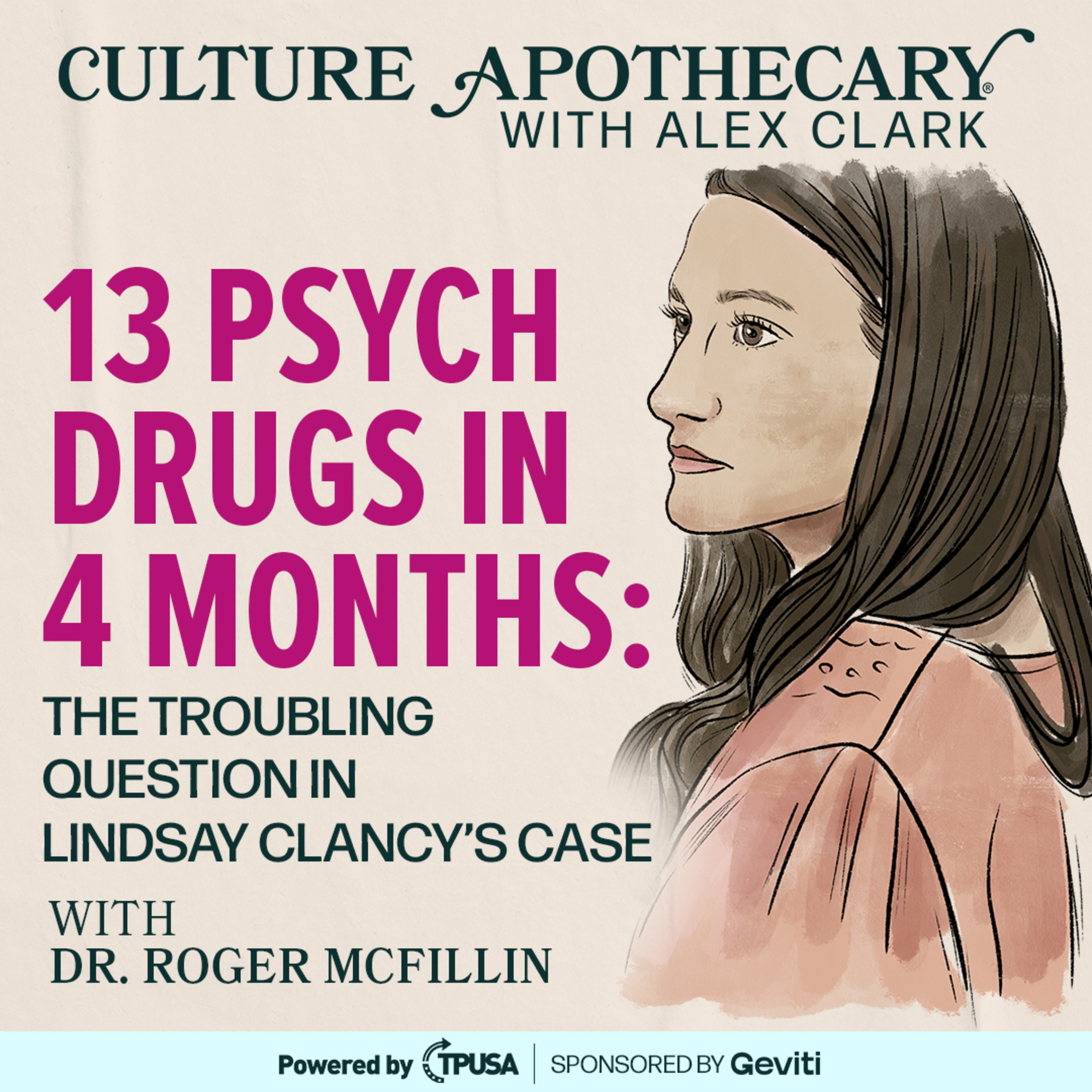
13 Psych Drugs in 4 Months: The Troubling Question in Lindsay Clancy’s Case | Dr. Roger McFillin
The episode asks whether fragmented care, medication changes, and severe sleep deprivation can help explain a catastrophic postpartum deterioration without erasing personal responsibility.
- 1McFillin argues that rapid movement among psychiatric medications may have intensified insomnia, agitation, withdrawal, and psychosis-like experiences.
- 2The discussion challenges drug-first care while emphasizing sleep, medical evaluation, social support, and cautious tapering rather than abrupt medication changes.
- 3The case expands into a broader critique of psychiatry, pharmaceutical influence, child prescribing, corporate medicine, and institutional accountability.
Don't miss
McFillin argues that the reported hallucination of a male voice may have reflected medication-related harm and that adding drugs can worsen adverse reactions.
The brief
Alex Clark and Roger McFillin examine reports that Lindsay Clancy received 13 psychiatric medications in four months before killing her children, framing treatment as a central question.
The conversation weighs compassion and accountability while questioning whether postpartum distress was assessed through medical testing, sleep support, and social care before medication was prescribed.
McFillin links insomnia, activation, akathisia, hallucinations, and repeated medication changes, arguing that adverse reactions may have been treated with still more drugs.
The case becomes a wider indictment of psychiatry, pharmaceutical influence, corporate healthcare, child prescribing, and explanations that reduce distress to diagnoses or chemical imbalance.
The proposed alternative centers on sleep, nutrition, nature, community, and comprehensive support, alongside a warning that psychiatric drugs should not be stopped abruptly.
Featuring
 Roger K. McFillin
Books & mentions

Meditations
A relevant companion to the episode’s discussion of meaning, agency, and responding to hardship.

The Surrender Experiment
A spiritual memoir that connects with the episode’s closing claims about fear, hardship, and surrender.

Radically Genuine
McFillin’s related project extends the episode’s critique of conventional medical authority.
Listen to the full episode and explore every guest, topic, and moment on PodLume.