
Aug 28, 2026 · 14 min
NASA turns spy-satellite hardware toward the universe
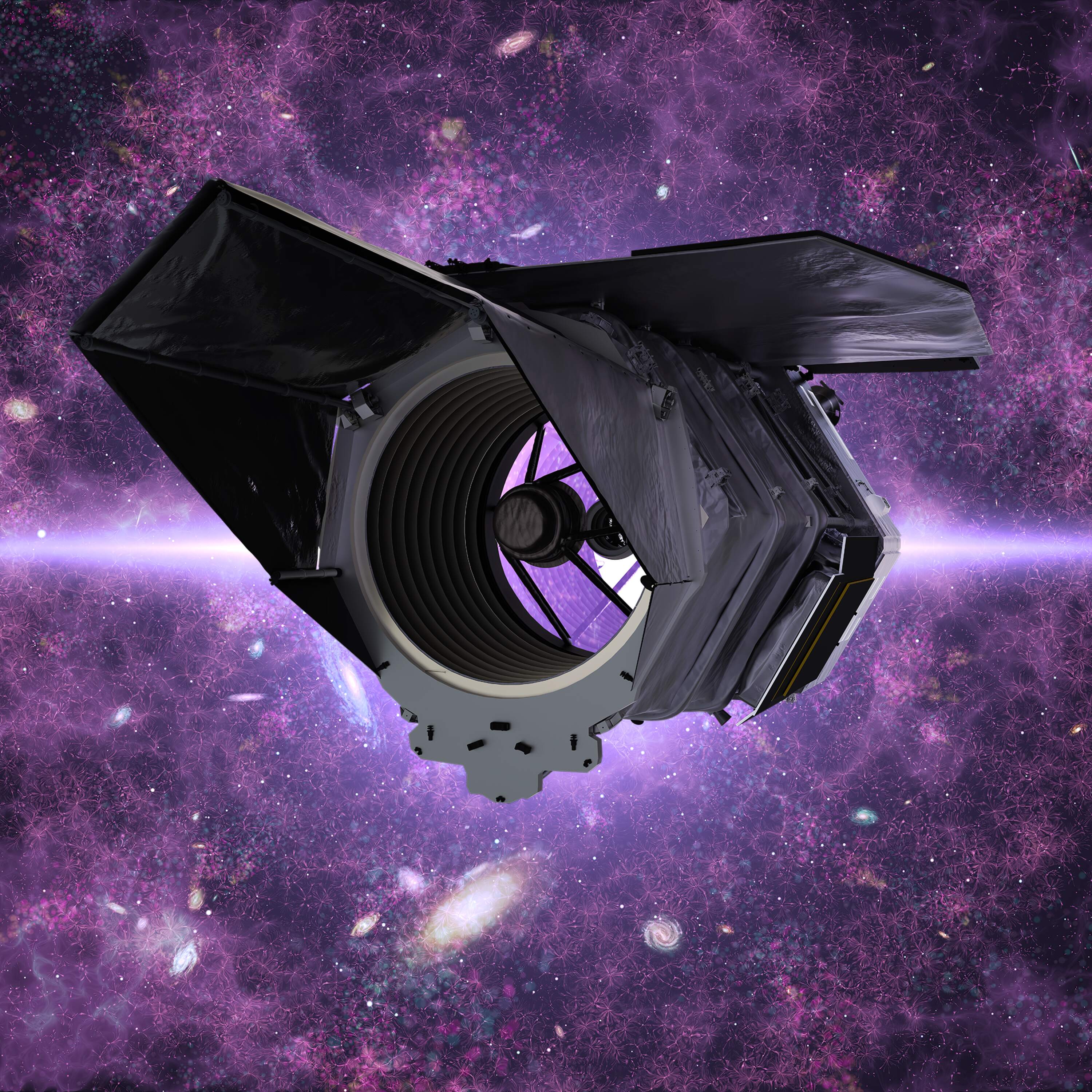
NASA's newest telescope has a top secret past
Roman’s unusually broad surveys could test cosmic expansion, map dark matter, find distant planets, and expose discoveries its planners did not anticipate.
- 1NASA adapted unused National Reconnaissance Office hardware into an infrared observatory with an unusually wide field of view.
- 2Roman could find thousands of type 1a supernovas, sharpening tests of the universe’s accelerating expansion.
- 3Open, repeated sky surveys will support dark-matter research, microlensing planet hunts, and discoveries beyond the mission’s original goals.
Don't miss
Joe Palca connects Roman’s open, wide-field surveys to the possibility of unexpected discoveries, echoing surprises from Hubble and Webb.
The brief
The Nancy Grace Roman Space Telescope began as unused National Reconnaissance Office spy-satellite hardware before NASA transformed it into an astronomical observatory.
Joe Palca explains why Roman’s wide-field infrared camera matters: it can survey enormous areas far faster than Hubble or Webb, while its coronagraph blocks starlight to reveal faint nearby objects.
Roman’s repeated observations could produce thousands of type 1a supernovas, giving cosmologists a powerful test of whether the universe’s accelerating expansion fits the current model.
The mission’s open data and community-designed surveys create room for dark-matter maps, microlensing searches for distant exoplanets, and transient events that appear between observations.
The most compelling possibility is what Roman finds accidentally: competing survey priorities may constrain the mission, but its broad view could reveal phenomena no one planned to seek.
Featuring
 Joe Palca
 National Reconnaissance Office
 NASA
NASAListen to the full episode and explore every guest, topic, and moment on PodLume.