
Aug 6, 2026 · 1h 15m
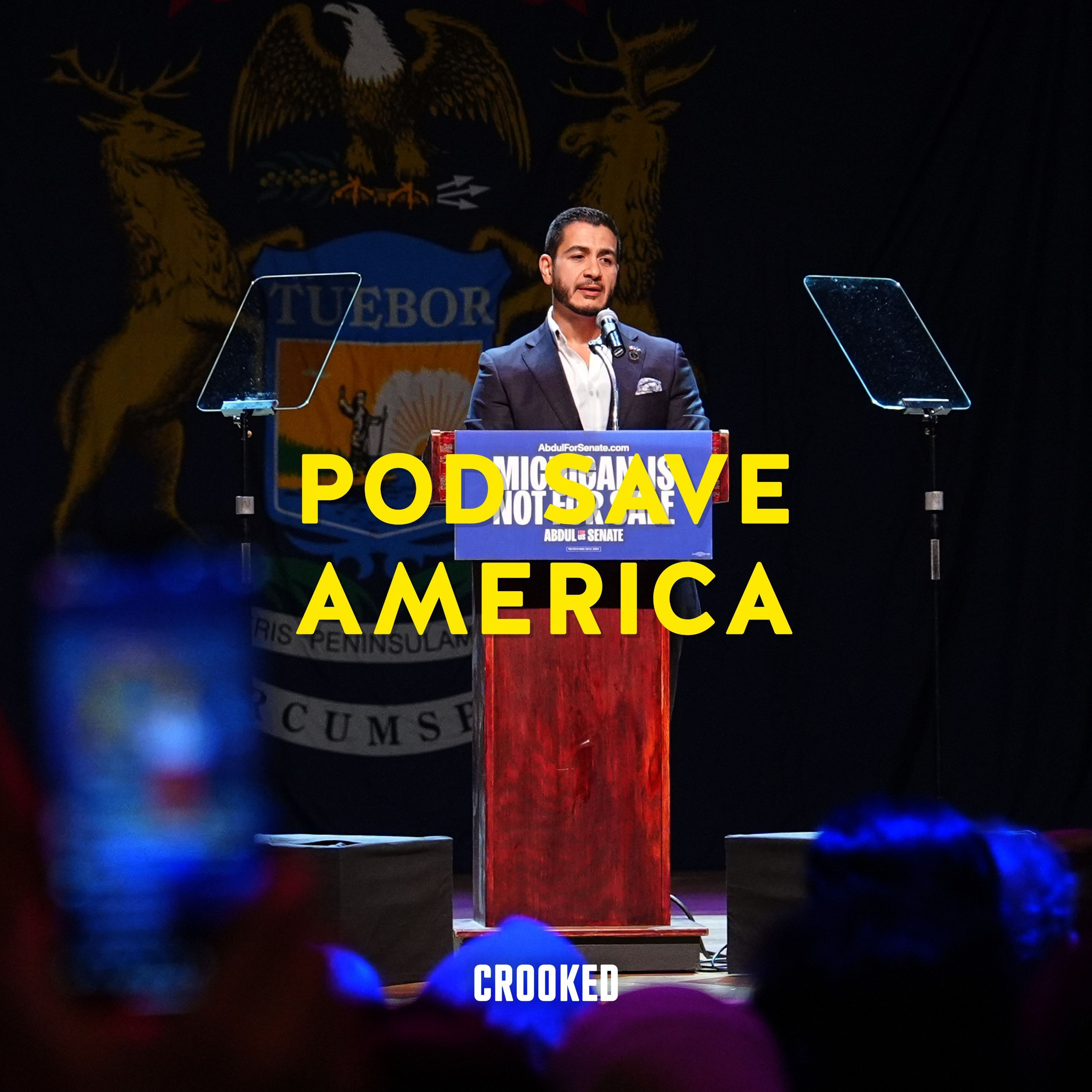
El-Sayed’s Michigan win tests Democrats’ coalition strategy
Bonus: Abdul El-Sayed Wins in Michigan feat. Bernie Sanders
The primary exposes Democrats’ tensions over outside money, working-class voters, progressive policy, and the path to defeating Mike Rogers.
- 1Abdul El-Sayed’s narrow Michigan victory revealed polling failures, regional divides, and the importance of Muslim and young voters.
- 2The hosts debate whether Democrats can unite behind El-Sayed while defining Mike Rogers beyond familiar MAGA attacks.
- 3Bernie Sanders argues that grassroots organizing, economic justice, and serious preparation for artificial intelligence should shape Democratic politics.
Don't miss
Bernie Sanders connects El-Sayed’s grassroots victory to the need for Democrats to organize working-class and diverse voters while preparing for AI’s disruptions.
The brief
Abdul El-Sayed’s narrow Michigan Democratic Senate primary victory over Haley Stevens exposed polling misses, regional divides, turnout differences, and the importance of Muslim voters.
Jon Favreau and Dan Pfeiffer weigh AIPAC and establishment spending against local concerns, then ask whether El-Sayed can unite Democrats for a general election against Mike Rogers.
The hosts examine El-Sayed’s coalition: strong support among young and college-educated voters, but weaker performance with rural and working-class voters, raising questions about progressive strategy.
Bernie Sanders calls the result an extraordinary grassroots victory and argues that Democrats must reach working-class, African American, and women voters through organizing and economic justice.
Sanders closes with a warning about artificial intelligence, including job displacement, misinformation, deepfakes, and children’s dependence on screens, framing AI as a democratic political challenge.
Featuring
 Jon Favreau
 Bernard Sanders
 Abdul El-Sayed
 Haley Stevens
 AIPAC
AIPAC Donald John Trump
 Michigan
Listen to the full episode and explore every guest, topic, and moment on PodLume.