
Sep 20, 2026 · 38 min
Britain’s Bayeux Tapestry return revives a fight over 1066
How a 1,000-Year-Old Tapestry Took London by Storm
The tapestry’s fragile journey and contested meaning show how a medieval account of conquest still shapes British identity.
- 1The Bayeux Tapestry turns the Norman Conquest into a vivid, human-scale story of invasion and political upheaval.
- 2Moving the fragile embroidery from France required extraordinary conservation, engineering, security, and diplomatic coordination.
- 3Its ambiguities let modern audiences read 1066 as national founding, cultural transformation, or historical loss.
Don't miss
The episode’s most striking sequence details the cross-Channel move: a hundred-person team, earthquake-resistant crates, heavy security, and painstaking installation at the British Museum.
The brief
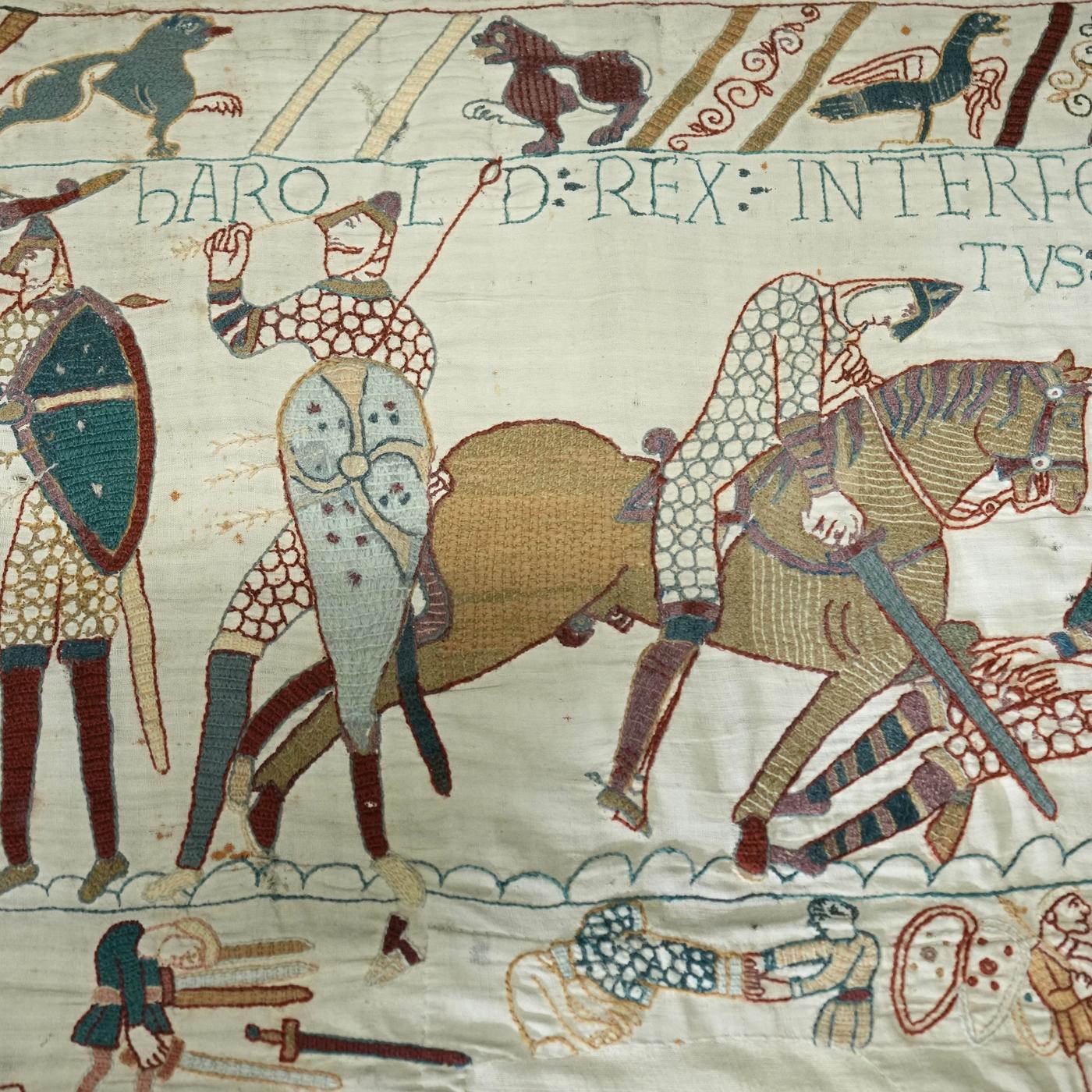
The Bayeux Tapestry’s temporary return to Britain triggered unusual public excitement, but its importance goes beyond age: it remains one of the most vivid records of the Norman Conquest.
Alex Marshall explains how the embroidery depicts the crisis of 1066, William’s invasion, and the transformation of English language, law, culture, and aristocracy.
Its origins remain uncertain, while centuries of French custody, Napoleon’s display, and a Nazi attempt to move it reveal how vulnerable and politically charged the object became.
The loan demanded a hundred-person team, earthquake-resistant crates, heavy security, and a custom table at the British Museum—an engineering operation built around avoiding irreversible damage.
In London, the tapestry’s humor, nudity, vivid colors, and scenes of invasion invite competing readings of 1066, from national founding to cultural loss and contemporary identity.
Featuring
 Alex Marshall
 Bayeux Tapestry
 William the Conqueror
 Stonehenge
Listen to the full episode and explore every guest, topic, and moment on PodLume.