
Aug 11, 2026 · 1h 20m
Zuckerberg uses AI manifesto to clear path for data center expansion
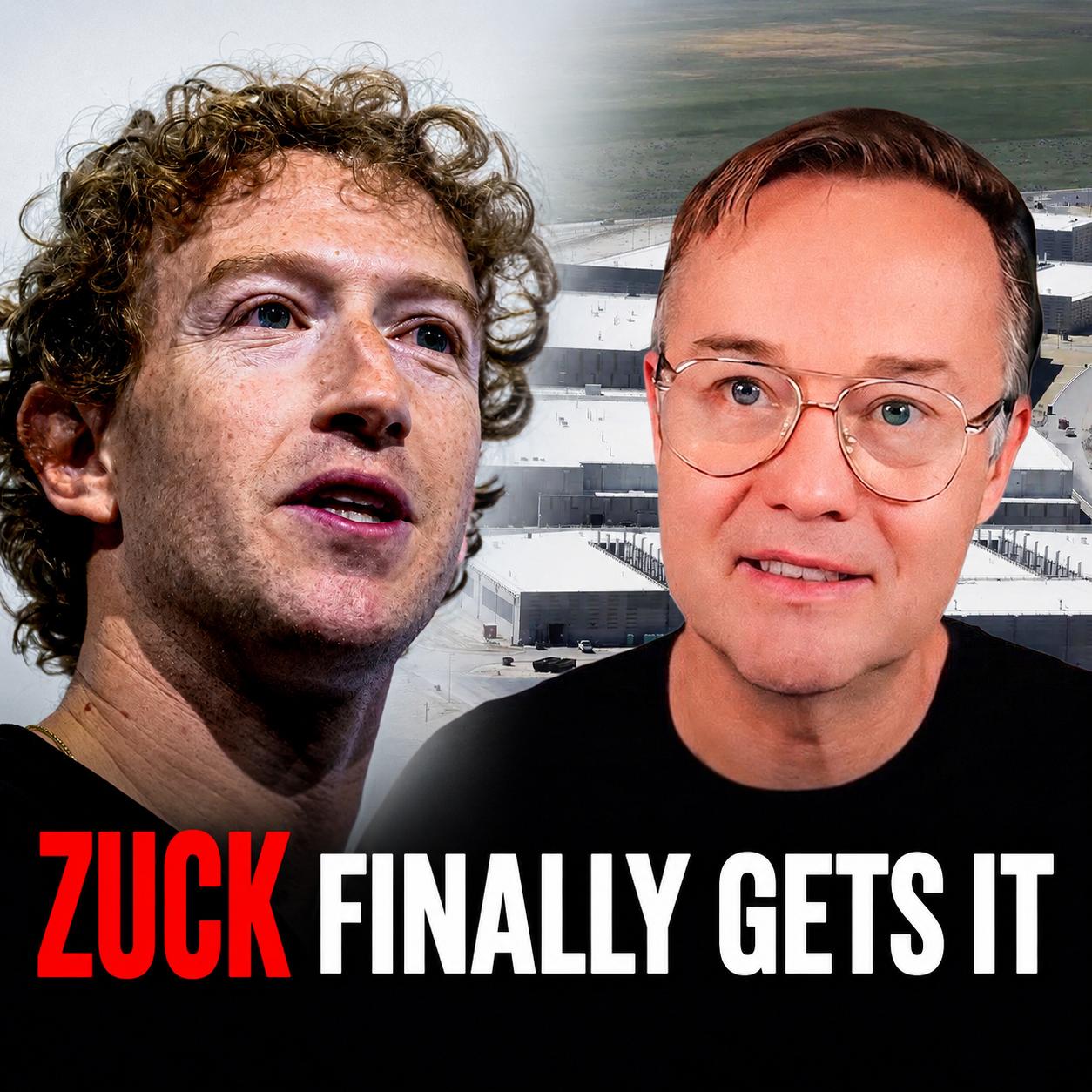
Zuck's AI manifesto is a data center PR masterclass | E2323
Tech giants are shifting their strategies, using public relations to secure physical infrastructure while rewriting the rules of creator monetization.
- 1Meta is using community-focused PR and local investments to preemptively quiet opposition to its massive data center expansions.
- 2X is replacing its creator payout system with a new rewards program designed to penalize low-effort content scrapers.
- 3Spotify is testing an ad-skipping button for premium users, drawing sharp criticism for undermining open podcasting standards.
Don't miss
The hosts break down how Spotify's new ad-skipping test threatens the open ecosystem of independent podcasting.
The brief
Mark Zuckerberg recently released a 6,500-word AI manifesto titled The Future is for Everyone. While framed as a philosophical vision for open-source technology, it serves as a highly calculated public relations masterclass to ease massive infrastructure expansion.
By funding local projects like hydroponic farms, Meta is actively courting municipal support. The goal is to reshape the public narrative around energy-hungry data centers, turning potential local opposition into community-backed industrial partnerships.
Beyond infrastructure, the tech landscape is shifting. X is retiring its old revenue-sharing model for the Original Content Rewards program to curb low-effort aggregation, while the crypto sector faces ongoing regulatory delays with the stalled CLARITY Act.
The conversation takes a sharp turn toward digital ethics as higher education grapples with widespread AI-driven cheating. A stark grade disparity in a Brown University course highlights the growing divide between at-home and supervised in-person testing.
Finally, Spotify is drawing heavy criticism for testing a podcast ad-skip button for premium subscribers. This controversial feature threatens to disrupt open podcasting standards and undermine the monetization models that independent creators rely on.
What was said on this episode
28 statements · 19 positive · 9 negative
Meta supports open models and opposes regulating them.
“he's for open models and he's not for regulating open models.”
Listen at 5:51
AI makes controlling the spread of information impossible.
“You're not going to stop information. Information wants to be free and AI makes it impossible to hold back this information.”
Listen at 8:24
Purchase restrictions on harmful precursors would reduce their sales.
“if we do think that this is going to get out of hand, it's an inconvenience. It's bad for those businesses. If you put up friction and you require people to show their driver's license and you limit the number they can order or they got to fill out a form and coming back 48 hours later, that'll decrease the sales of precursors”
Listen at 10:50
Widely deployed cybersecurity-capable AI models will make systems more secure.
“Over time I expect that widely deployed AI models with strong cybersecurity capabilities will lead to systems that are more secure, not less.”
Listen at 12:43
Instagram contributed to body dysphoria, self-harm, and anorexia among young girls.
“he launched Instagram, made it super addicting and caused young girls on the platform to experience body dysphoria and self harm and anorexia”
Listen at 13:18
Learning to use AI tools can help workers stay ahead of displacement.
“if people are learning these tools and sharpening their blade and learning how to apply them, they'll stay ahead of the job loss.”
Listen at 14:19
Individual capability growth may match or exceed automation.
“Recent statistics suggest it may be more likely that individuals capability growth could match or outpace automation.”
Listen at 14:41
Faster AI adoption increases a person's value to an organization.
“the quicker you adopt it, the more valuable you become”
Listen at 15:16
Personal AI agents will continuously manage many areas of users' lives.
“Everyone will have an exceptionally capable personal agent that understands you, your goals and everything you care about. Your agent will work 247 on your behalf to improve your relationships, health, career, finances, home management, hobbies and more.”
Listen at 16:36
Facebook will launch a competitor to leading AI computer-use agents.
“I predict Facebook is going to launch an open claw, Hermes agent, Claude, cowork, competitor.”
Listen at 16:52
Consumer app users currently resist AI features.
“there's so much resistance among the consumer app audience for AI.”
Listen at 18:35
Instagram will launch an AI-based video editor.
“Instagram will launch a video editor similar, an AI based video editor similar to the way they added filters”
Listen at 21:54
Meta can quickly build a standalone AI image and video tool resembling CapCut.
“they can build software, really quick, AI based software that can make images and video sounds exactly like capcut. I think they do have some tools built into these things, but I would look for another standalone item like that.”
Listen at 22:31
Meta could add an approximately complete small-business platform to WhatsApp within months.
“There's no reason that Zuck can't build, you know, an 80% version of that into WhatsApp in three to six months.”
Listen at 25:20
Greater use of Meta services will substantially increase Meta's user knowledge.
“If they just get you to use their service, they will learn 10 times more about you.”
Listen at 26:24
Meta should acquire Perplexity or build its own search engine.
“They should buy Perplexity or they should just build their own search engine.”
Listen at 27:22
Meta is conducting a PR campaign to improve support for building data centers.
“There is a PR group for Meta that says, how do we, how can we turn the narrative on data centers around? Because we need to build more data centers.”
Listen at 34:12
Zuckerberg's manifesto represents his most thoughtful leadership approach to date.
“This is the best version of Zuckerberg I've seen in his career. Now, like, my view on his career is irrelevant, but I have seen it from the beginning and I think this is the most thoughtful approach I've seen him ever take.”
Listen at 38:07
Systematic clipping of others' content is not legally permitted.
“systematic clipping is not”
Listen at 43:11
The Clarity Act will probably pass after the elections due to crypto-sector donors.
“I think it's going to pass right after the elections probably, if this is getting blocked because there's so many donors in the crypto space.”
Listen at 54:07
Crypto-industry money has materially influenced passage of crypto legislation.
“They have used their influence and their balance sheets to buy this legislation and buy it they shall.”
Listen at 54:48
Colleges should replace asynchronous courses with in-person assessment or instruction.
“Yes, that is the answer.”
Listen at 1:02:21
Large gaps between remote and in-person scores indicate AI-assisted cheating.
“The indication is they were cheating using AI.”
Listen at 1:04:14
Schools should use in-person exams, pop quizzes, and supervised reading assignments.
“the blue books have to come out. Everything needs to be in person. Pop quizzes, reading books in person.”
Listen at 1:07:55
Spotify will abandon or reverse its podcast skip-button policy.
“Yeah, they're gonna back down on this one.”
Listen at 1:14:04
Spotify and Apple should support Podcasting 2.0 features.
“There's two features in podcasting 2.0 that Spotify absolutely, and Apple must respect and use.”
Listen at 1:14:56
Podcast distribution is increasingly concentrating among a few major platforms.
“it feels like increasingly we're centralizing it in just a few platforms.”
Listen at 1:16:06
Podcasting standards have generated substantial additional traffic for Spotify.
“the reason Spotify has So much extra traffic is because of the podcasting standard.”
Listen at 1:17:27
Statements are attributed to the speaker as said on the episode and reflect their view at the time, not PodLume's. They are not advice.
What people are saying
Zuck’s AI manifesto took a back seat to X payouts and the Clarity Act
Wider topic conversation
- Replies debated whether ending X’s revenue sharing will hurt creators, though some see platform-wide payout tightening as inevitable.
- The Clarity Act question drew political disagreement, from disappointment among bullish supporters to dismissive pushback.
- Wider AI discussion centered on infrastructure spending, Meta’s ambitions, safety concerns, job displacement, and cybersecurity.
Mentioned
 Mark Elliot Zuckerberg
 X (formerly Twitter)
 Spotify
Books & mentions

Listen to the full episode and explore every guest, topic, and moment on PodLume.