
Sep 11, 2026 · 1h 20m
When Christian discernment turns into conspiracy obsession
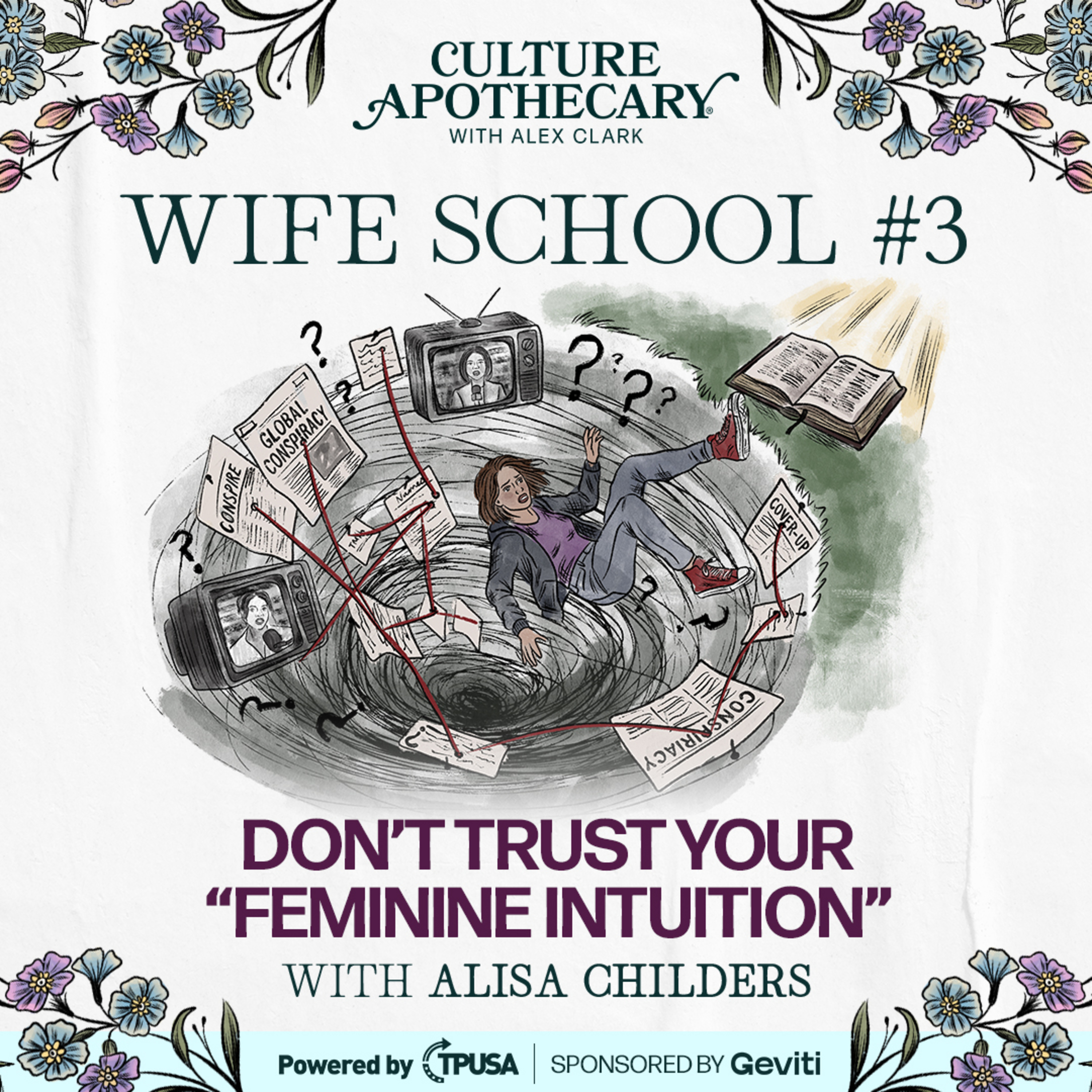
Don’t Trust Your “Feminine Intuition” | Wife School #3 Alisa Childers
The conversation examines how suspicion, secret-knowledge narratives, and unfalsifiable claims can damage faith, family trust, and marital peace.
- 1Biblical discernment requires evidence, humility, and a willingness to accept correction rather than treating suspicion as proof.
- 2Conspiracy culture can imitate Gnosticism by promising special knowledge while producing anxiety, gossip, idolatry, and spiritual distraction.
- 3Healthy skepticism distinguishes observable inconsistencies from speculation that makes every contradiction evidence of a deeper cover-up.
Don't miss
Alisa Childers offers a practical test for conspiracy thinking: ask whether a person would accept evidence that contradicts the conclusion they already prefer.
The brief
Alex Clark and Alisa Childers use disputes surrounding Charlie Kirk’s death and Candace Owens’s claims to examine where biblical discernment ends and conspiracy obsession begins.
The central warning is that “just asking questions” can disguise accusations, turning unsupported suspicion into gossip, slander, anxiety, and spiritual distraction.
Childers compares conspiracy culture with Gnosticism: both can promise privileged knowledge and create personality-driven movements that isolate people from ordinary evidence and accountability.
The conversation also addresses marriage, arguing that chronic distrust can undermine family peace, a wife’s relationship with her husband, and the ability to accept leadership.
Its practical test is simple but demanding: would someone accept evidence against a preferred theory, or has investigation become an emotional commitment?
Featuring
 Alisa Childers
 Charlie Kirk
 Saint Paul
 Gospel of Thomas
 Against Heresies
Books & mentions

Listen to the full episode and explore every guest, topic, and moment on PodLume.