
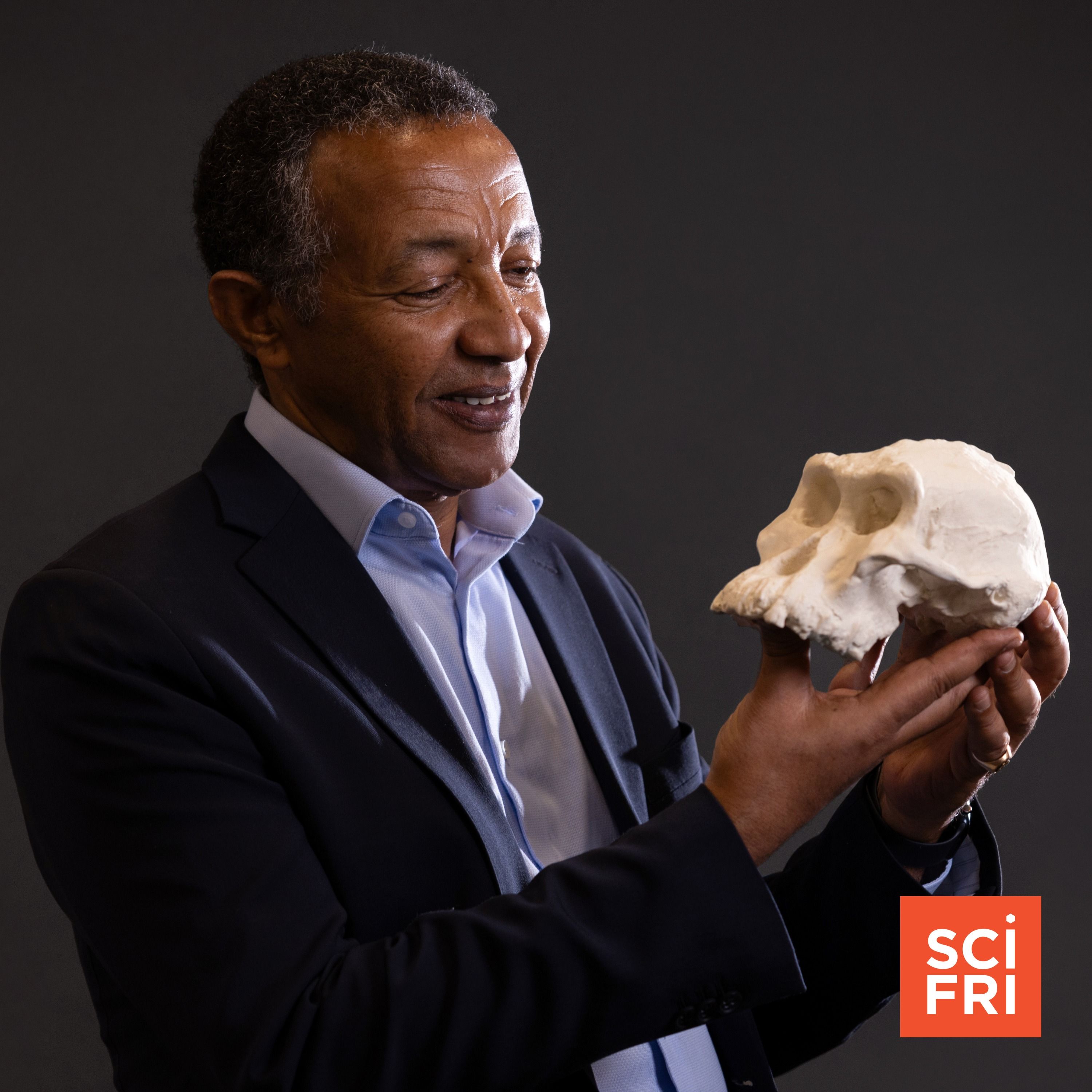
Sep 16, 2026 · 26 min
Tiny fossil teeth redraw humanity’s branching past
Telling the tale of human origins, one fossil tooth at a time
The episode shows how fossils, genetics, and more equitable research are reshaping what scientists know about human evolution.
- 1Small fossil teeth can reveal major chapters in millions of years of human evolution.
- 2Genetic evidence points to unknown hominid populations and reinforces that human evolution followed many branches.
- 3Paleoanthropology is becoming more collaborative as researchers confront the field’s colonial legacy and involve local communities.
Don't miss
Haile-Selassie dismantles the “missing link” idea, explaining why human evolution is a branching story with many undiscovered populations.
The brief
Yohannes Haile-Selassie explains how Ethiopia’s fossil record, including easily overlooked teeth, helps reconstruct millions of years of human evolution.
Fieldwork means heat, tents, early mornings, and trained attention: researchers learn to spot tiny fragments instead of being distracted by larger objects.
Genetics has added “ghost” ancestors to the picture, linking mysterious fossils and previously unknown hominid populations to groups such as the Denisovans.
Haile-Selassie rejects the search for one missing link, describing human evolution as a branching story filled with transitional populations still waiting to be found.
The conversation also confronts paleoanthropology’s colonial legacy and argues that local communities should have a greater role in research and recognition.
Featuring
 Yohannes Haile-Selassie
 Ardipithecus ramidus
 Ardipithecus kadabba
 Australopithecus afarensis
 Homo erectus
 Ethiopia
Listen to the full episode and explore every guest, topic, and moment on PodLume.