
Aug 26, 2026 · 54 min
The DSA turns primary victories into a test of Democratic power
The Stunning Rise of the Democratic Socialists of America
The Democratic Socialists of America has moved from intellectual fringe to electoral force, but its growth raises unresolved questions about coalition-building, compromise, and national viability.
- 1The DSA’s revival runs from Eugene V. Debs and Michael Harrington through Bernie Sanders’s campaigns and a new generation of candidates.
- 2Its decentralized structure gives members influence while making national coherence, electoral compromise, and a shared strategy difficult.
- 3Recent victories broaden the movement’s reach, but the socialist label could either expand Democratic power or become a liability beyond safely blue districts.
Don't miss
The discussion of Alexandria Ocasio-Cortez crystallizes how the DSA’s participatory culture collides with the compromises required to govern.
The brief
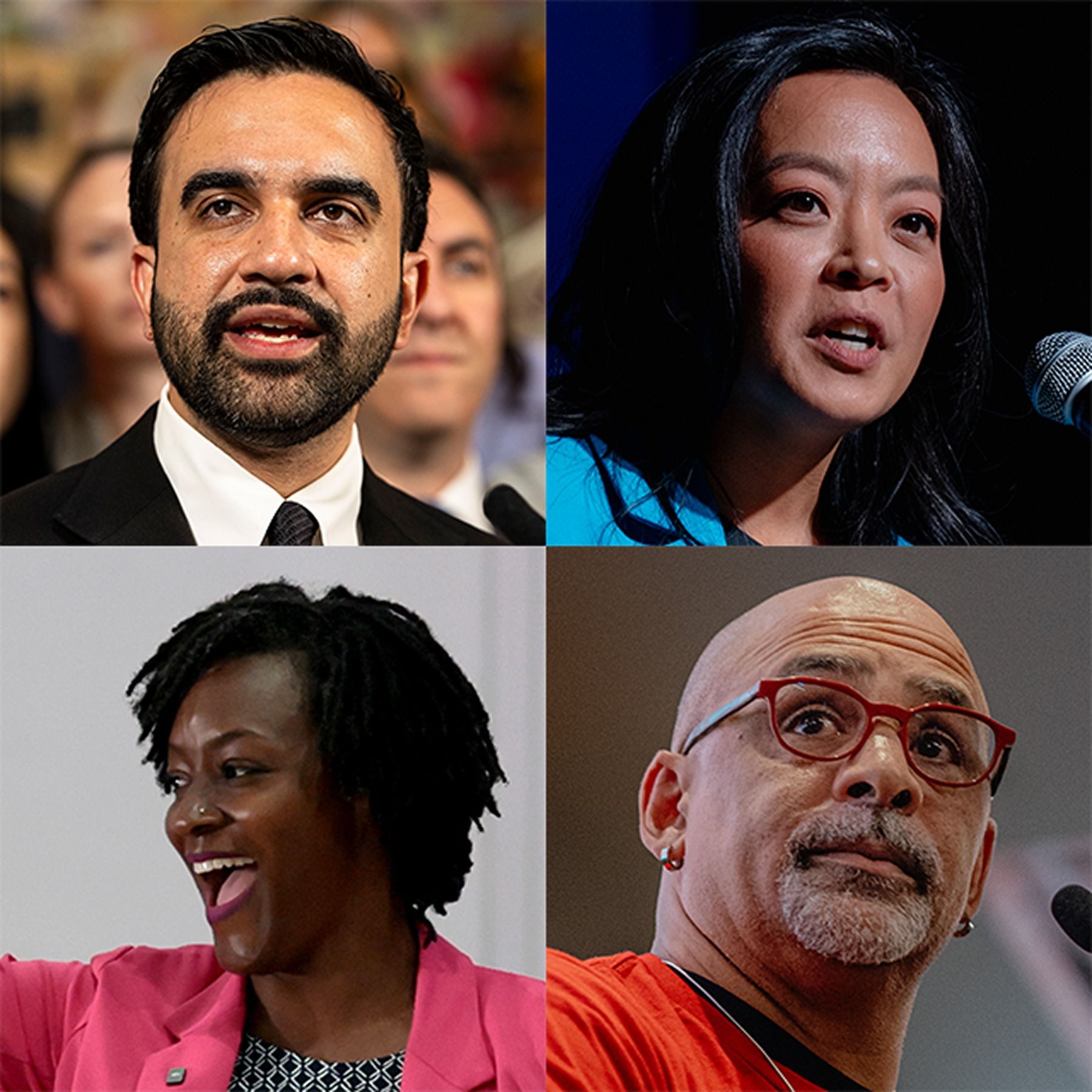
A string of Democratic Socialist primary victories has pushed the DSA from relative obscurity into the center of Democratic debates about power, identity, and electoral strategy.
Charlie Homans traces the movement’s lineage from Eugene V. Debs and the Socialist Party of America to Michael Harrington’s 1980s organization and Bernie Sanders’s revival of the socialist label.
The modern DSA is decentralized and internally divided: some members prioritize Democratic elections, while others emphasize labor organizing or direct action, making national coherence difficult.
Alexandria Ocasio-Cortez embodies the movement’s central tension, as governing inside Congress requires compromises that some DSA factions reject, especially over Israel-Palestine and other litmus tests.
The episode’s larger question is whether DSA-aligned candidates can build a multiracial coalition beyond safely blue districts without turning socialism into a liability for Democrats.
Featuring
 Alexandria Ocasio-Cortez
Mentioned
 Democratic Socialists of America
 Bernard Sanders
 Eugene V. Debs
 Michael Harrington
Listen to the full episode and explore every guest, topic, and moment on PodLume.