
Sep 23, 2026 · 18 min
Submerged landscapes rewrite early American history
Underwater archeology reveals clues about Ice Age humans
Underwater sites preserve evidence from vanished Ice Age environments, offering a crucial test of how and when people reached the Americas.
- 1Lake Erie’s drowned shorelines reveal how post-Ice Age climate change erased landscapes where people once lived.
- 2Ice Age Florida was a vast prairie, and the Page-Ladson site records people processing animals near a sinkhole.
- 3Underwater preservation and radiocarbon dating help challenge the once-dominant Clovis-first model of American settlement.
Don't miss
Jessi Halligan explains how mastodon digesta from Florida’s Page-Ladson site helped date the animal’s death and challenge Clovis-first assumptions.
The brief
Beneath Lake Erie, sonar surveys trace shorelines and possible camps from the last ice age—landscapes later submerged as climate change reshaped the region.
Reid Frazier reports from the search, while Jessi Halligan explains why drowned environments can preserve plants, animals, and human activity that disappeared on land.
Halligan’s account of Ice Age Florida recasts the state as a broad prairie populated by mammoths and mastodons, with people processing animals at the Page-Ladson site.
Mastodon digesta and radiocarbon dating helped establish the site’s age, adding evidence against the once-dominant Clovis-first model of settlement in the Americas.
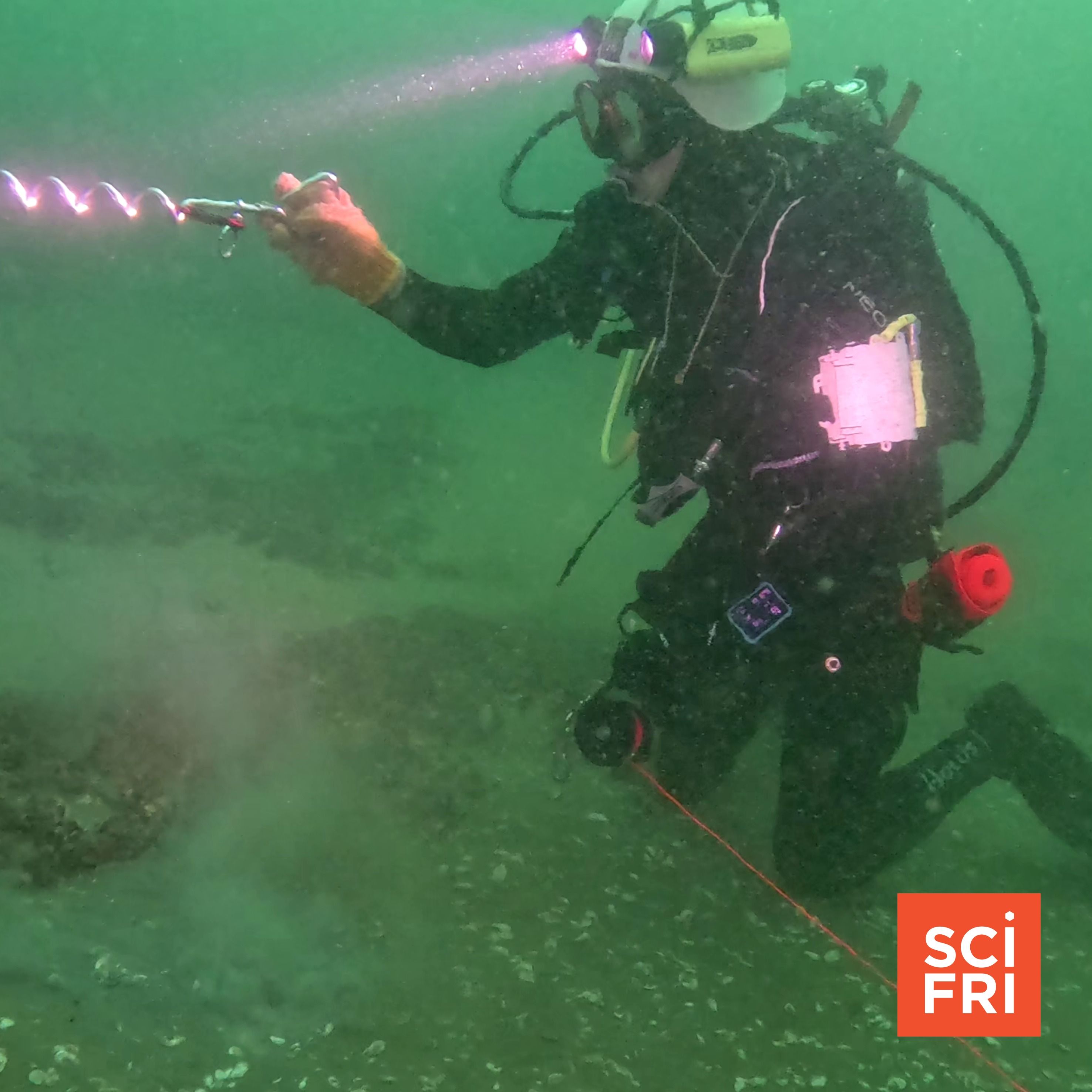
The work looks familiar underwater—excavation squares, trowels, and careful documentation—but weather, waves, tides, equipment, and limited visibility make every discovery hard-won.
Featuring
 Jessi Halligan
Mentioned
 Lake Erie
 North America
Books & mentions

Listen to the full episode and explore every guest, topic, and moment on PodLume.