
Aug 11, 2026 · 12 min
Some monkeys face even steeper childbirth challenges than humans
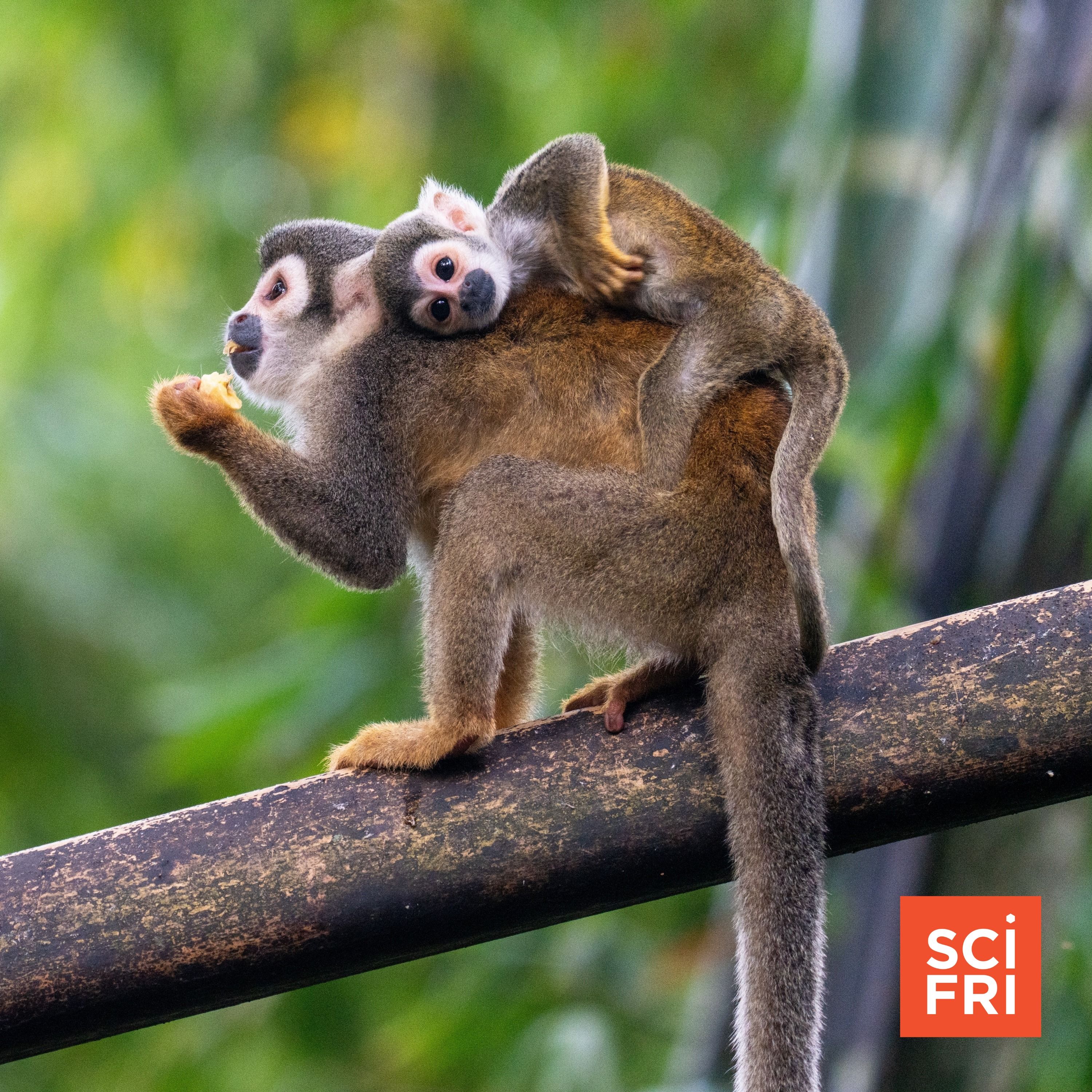
Some primates undergo even more extreme childbirth than humans
Comparing primate births reveals how anatomy, brain evolution, and social support shaped the human experience of childbirth.
- 1Human childbirth reflects a trade-off between pelvises adapted for upright walking and babies with large, growing brains.
- 2Squirrel monkeys and tamarins can have infant heads nearly twice the size of the maternal pelvis.
- 3Humans stand out among primates for universally developing social support, including midwifery, around childbirth.
Don't miss
Lia Betti describes a gelada monkey birth in which the baby emerges facing forward, an unusual and striking contrast with human birth.
The brief
Human childbirth poses an evolutionary puzzle: upright walking constrained the pelvis, while expanding brains produced infants with relatively large heads.
Anthropologist Lia Betti compares humans with squirrel monkeys and tamarins, whose infant heads can approach twice the size of the maternal pelvis.
The discussion weighs pain, vocalization, and mortality against the evolutionary trade-off between efficient bipedalism and large-brained offspring.
Humans appear unusual not only for difficult births but also for the widespread social support surrounding them, especially midwifery.
Betti recalls striking primate births, including a gelada baby emerging face-first and a dangerous birth high in the trees.
Featuring
Mentioned
 University College in London
Listen to the full episode and explore every guest, topic, and moment on PodLume.