
Aug 19, 2026 · 18 min
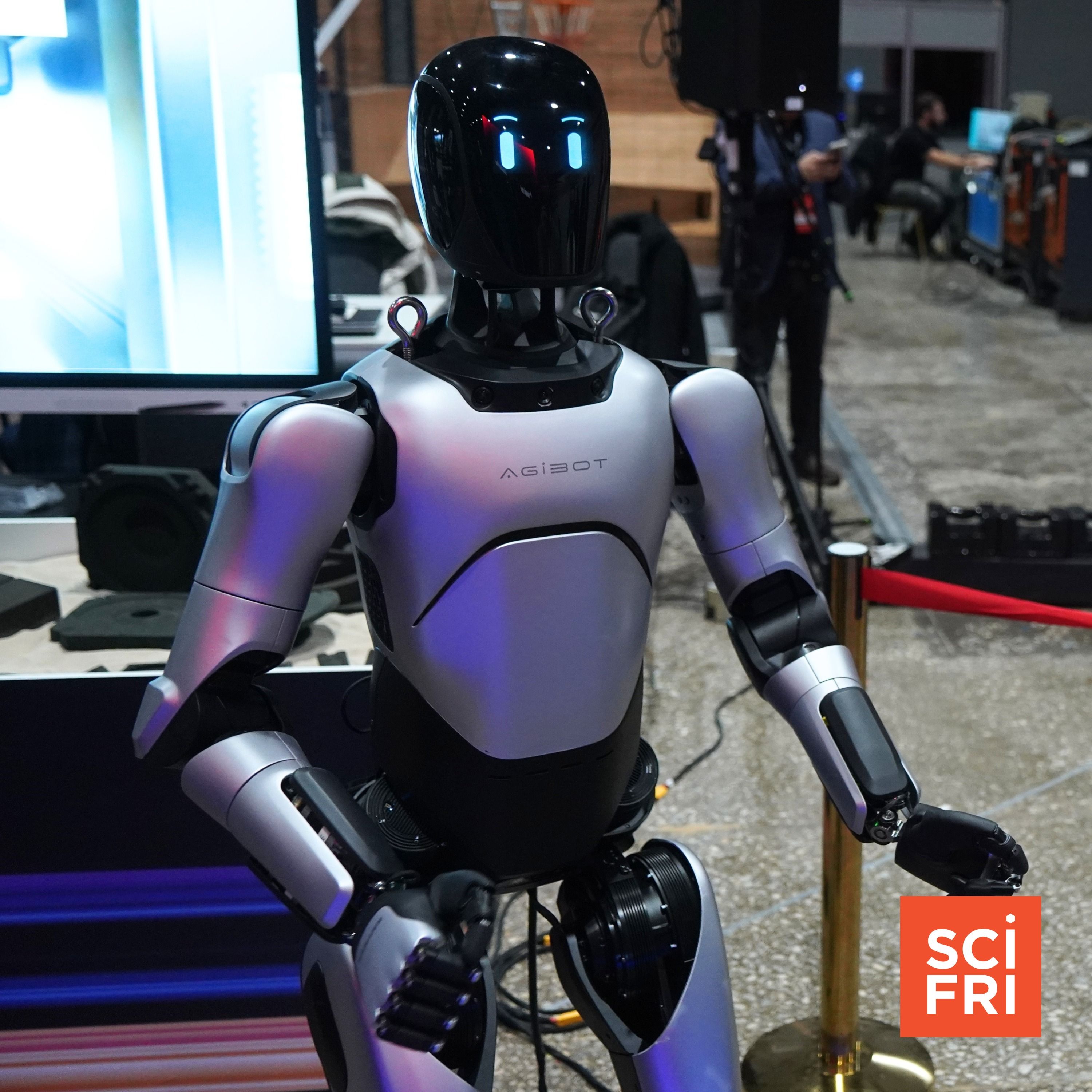
Robots learn the physical world as AI reshapes mathematics
Creating 'world models' for robots + An AI math shakeup
The episode examines two frontiers where AI must move beyond fluent prediction: navigating physical environments and producing mathematics humans can verify and understand.
- 1Household robots need spatial and physical world models, with teleoperation supplying training data for unpredictable environments.
- 2Privacy and reliability remain major barriers to useful humanoid robots, which are still years from routine household deployment.
- 3AI is finding mathematical counterexamples and proposing proofs, but humans remain essential for verification, interpretation, and meaning.
Don't miss
Emily Riehl explains why AI’s ability to find unusual mathematical counterexamples may be more immediately useful than its ability to produce polished proofs.
The brief
Joanna Stern explains why robots need world models that track space, movement, and changing conditions—not just the text patterns mastered by large language models.
Teleoperation and sensor-rich video can teach household robots useful hand movements, but laundry folding exposes how far reliable domestic automation still has to go.
Recording life inside homes could supply valuable training data, yet privacy safeguards do not erase the larger question of who controls that intimate footage.
Mathematician Emily Riehl describes AI systems finding counterexamples and generating purported proofs, with Lean helping verify claims while humans decide what they mean.
The episode’s central tension is consistent across both fields: AI can search enormous spaces, but physical reliability and mathematical understanding still require human judgment.
Featuring
 Joanna Stern
 Emily Riehl
 OpenAI
 Amazon.com, Inc.
 Google DeepMind
Listen to the full episode and explore every guest, topic, and moment on PodLume.