
Sep 13, 2026 · 16 min
MindChildren tests social robots where empathy matters
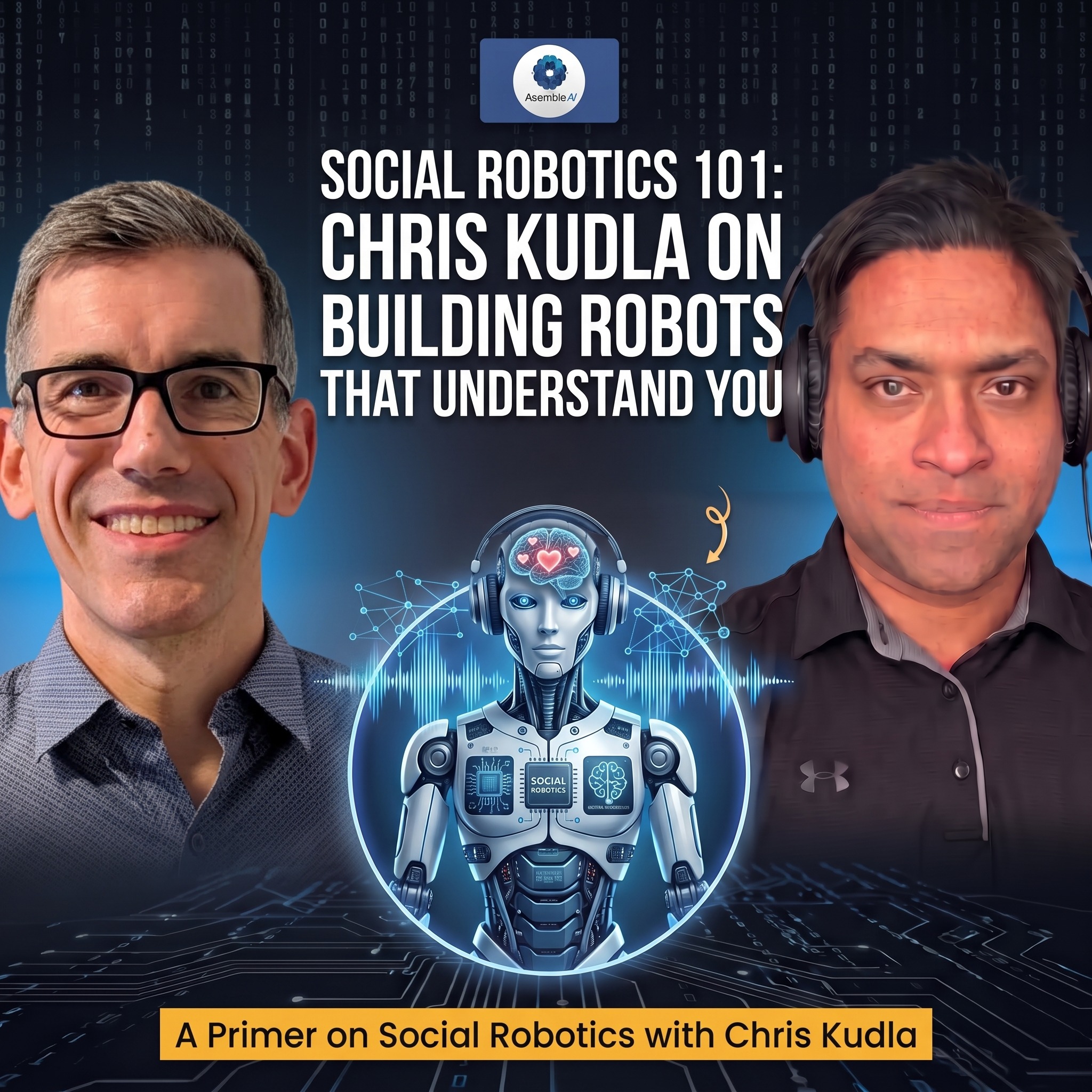
EP 72: Social Robotics 101: Building Robots That Understand You | Chris Kudla, Mind Children
Cody’s path from prototype to classrooms and hospitals raises practical questions about safety, privacy, and whether robots can earn trust.
- 1MindChildren is building Cody for education, healthcare, hospitality, and other settings where meaningful interaction matters.
- 2Cody combines modular AI with memory and interactive reasoning, including a hide-and-seek demonstration involving contextual search.
- 3The next phase depends as much on compliant hardware and institutional privacy safeguards as on emotional intelligence.
Don't miss
Kudla describes Cody’s hide-and-seek demonstration, where the robot searches for a person while using contextual interaction and memory.
The brief
Chris Kudla explains why MindChildren chose social robotics over easier industrial applications: the company is betting that AI’s long-term value includes meaningful interaction with people.
MindChildren’s prototype, Cody, pairs a modular social robotics system with memory and interactive behavior; a hide-and-seek demo shows the robot searching for a person in context.
The ambition is emotional intelligence in settings such as hospitals, but the data strategy is deliberately constrained: classroom and healthcare information should remain inside the institution.
Cody’s next hardware iteration will emphasize compliant, safer movement before pilot deployments of roughly 10 to 20 robots, putting physical design ahead of grand predictions.
Schools and homes present a trust problem as much as a technical one, requiring reassurance for parents, teachers, unions, and patients about privacy, safety, and purpose.
Featuring
Mentioned
Listen to the full episode and explore every guest, topic, and moment on PodLume.