
Aug 13, 2026 · 12 min
Meteor debris, solar turbulence and a lunar crash
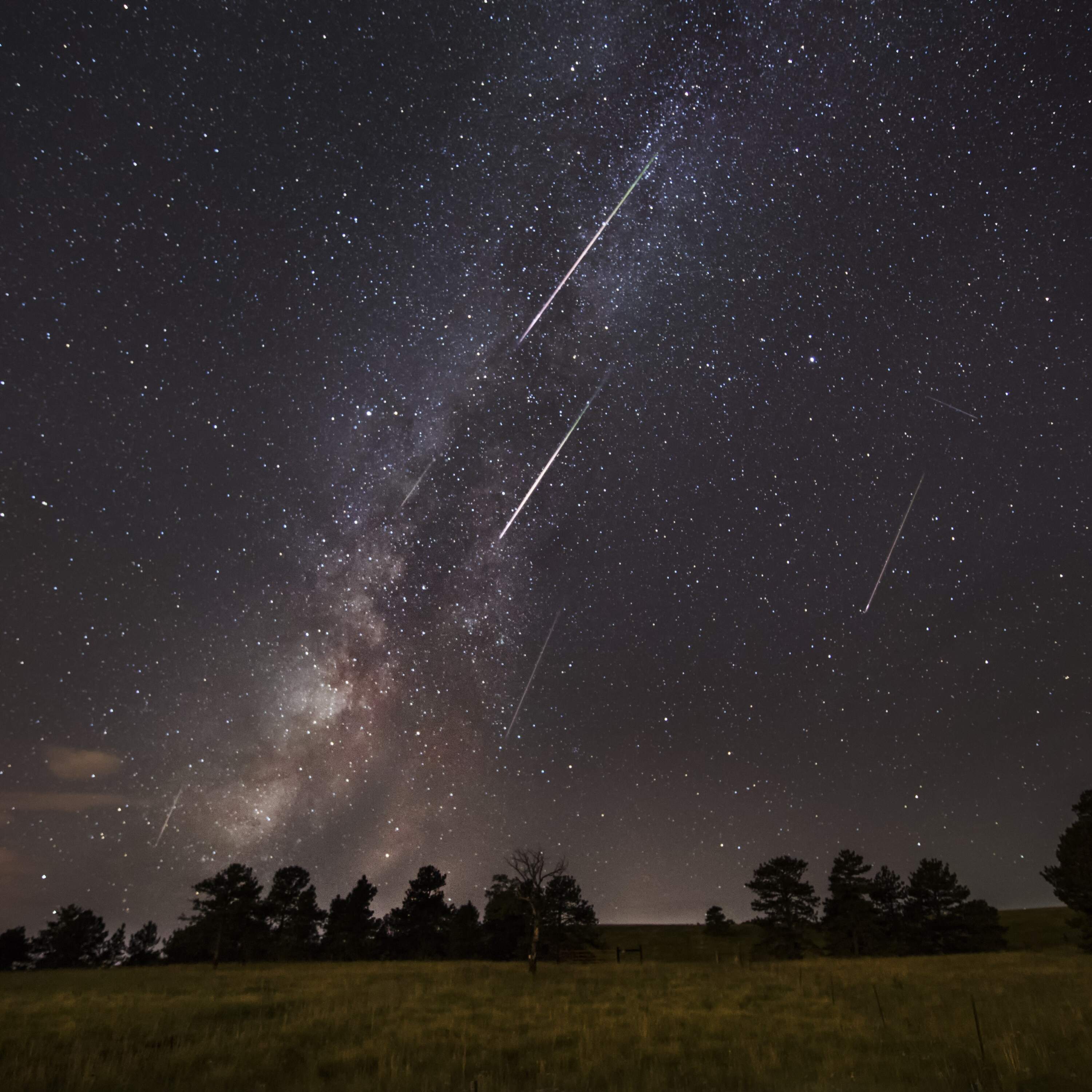
How to see the year's best meteor shower tonight
The episode connects an accessible night-sky spectacle to frontier observations of the Sun and the scientific opportunities—and risks—created by space debris.
- 1The Perseids form when Earth crosses debris shed by Comet Swift-Tuttle, offering a yearly meteor-watching opportunity.
- 2High-resolution solar observations reveal turbulent plasma and vortices that may clarify the Sun’s hot corona and explosive storms.
- 3A SpaceX Falcon 9 fragment’s lunar impact could aid research while underscoring the challenge of managing space debris.
Don't miss
The discussion of a SpaceX Falcon 9 fragment’s unintended lunar impact turns a collision into a possible experiment while exposing the wider space-debris problem.
The brief
Regina, Scott and returning guest Ari Daniel frame three nearby-space stories: the Perseid meteor shower, new views of solar turbulence and a rocket fragment’s lunar impact.
The Perseids appear when Earth crosses debris left by Comet Swift-Tuttle. The episode explains why tiny fragments glow and offers practical guidance for watching the annual display.
The Daniel K. Inouye Solar Telescope has captured plasma turbulence and vortices on the Sun’s surface, clues that may help explain its hot corona and explosive storms.
A piece of a SpaceX Falcon 9 rocket struck the Moon unintentionally, but the predictable collision could help scientists study lunar material and sharpen debates about space debris.
Taken together, the stories show how ordinary skywatching and advanced instruments reveal a solar system shaped by motion, turbulence, impact and human activity.
Featuring
 Perseids
 Project Hail Mary
Books & mentions
Listen to the full episode and explore every guest, topic, and moment on PodLume.