
Aug 24, 2026 · 27 min
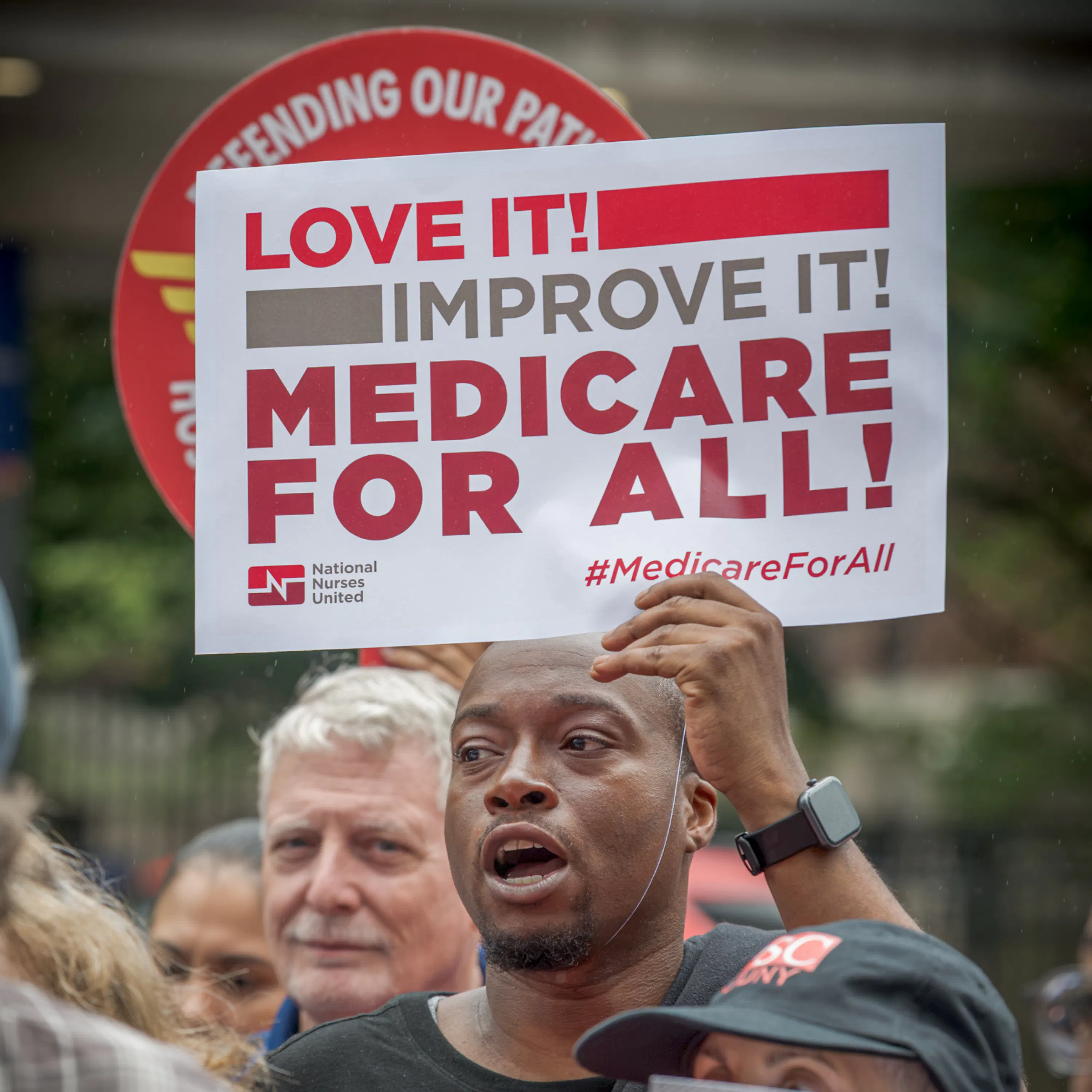
Medicare for All tests its political moment
Medicare for All fever
The episode examines whether frustration with expensive care can turn renewed support for universal coverage into policy rather than rhetoric.
- 1The Affordable Care Act expanded coverage and protections but left the central problem of high medical costs unresolved.
- 2Medicare for All describes competing approaches, from replacing private insurance to allowing people to buy into public coverage.
- 3Progressive momentum has already shifted the health care debate, even if congressional passage remains unlikely in the near term.
Don't miss
Rachel Booth separates the broad Medicare for All rallying cry from the specific federal single-payer legislation and its alternatives.
The brief
Medicare for All has traveled from Jacob Javits’s 1970 proposal to Bernard Sanders’s 2016 campaign and today’s progressive politics, raising a question about whether its moment has arrived.
Julie Whitaker reviews how the Affordable Care Act expanded coverage through subsidies, protections, and benefits, while its political legacy remains tangled with premiums, enrollment, and affordability.
The ACA broadened access without solving why American health care costs so much, as drug, hospital, and labor expenses continue to pressure patients and policymakers.
Rachel Booth distinguishes the Medicare for All slogan from the federal single-payer proposal and alternatives such as Medicare for all who want it.
The episode’s central tension is whether renewed support can pass universal coverage or mainly reshape the debate ahead of the 2028 presidential cycle.
Featuring
 Jacob Javits
 Bernard Sanders
 Barack Hussein Obama II
Listen to the full episode and explore every guest, topic, and moment on PodLume.