
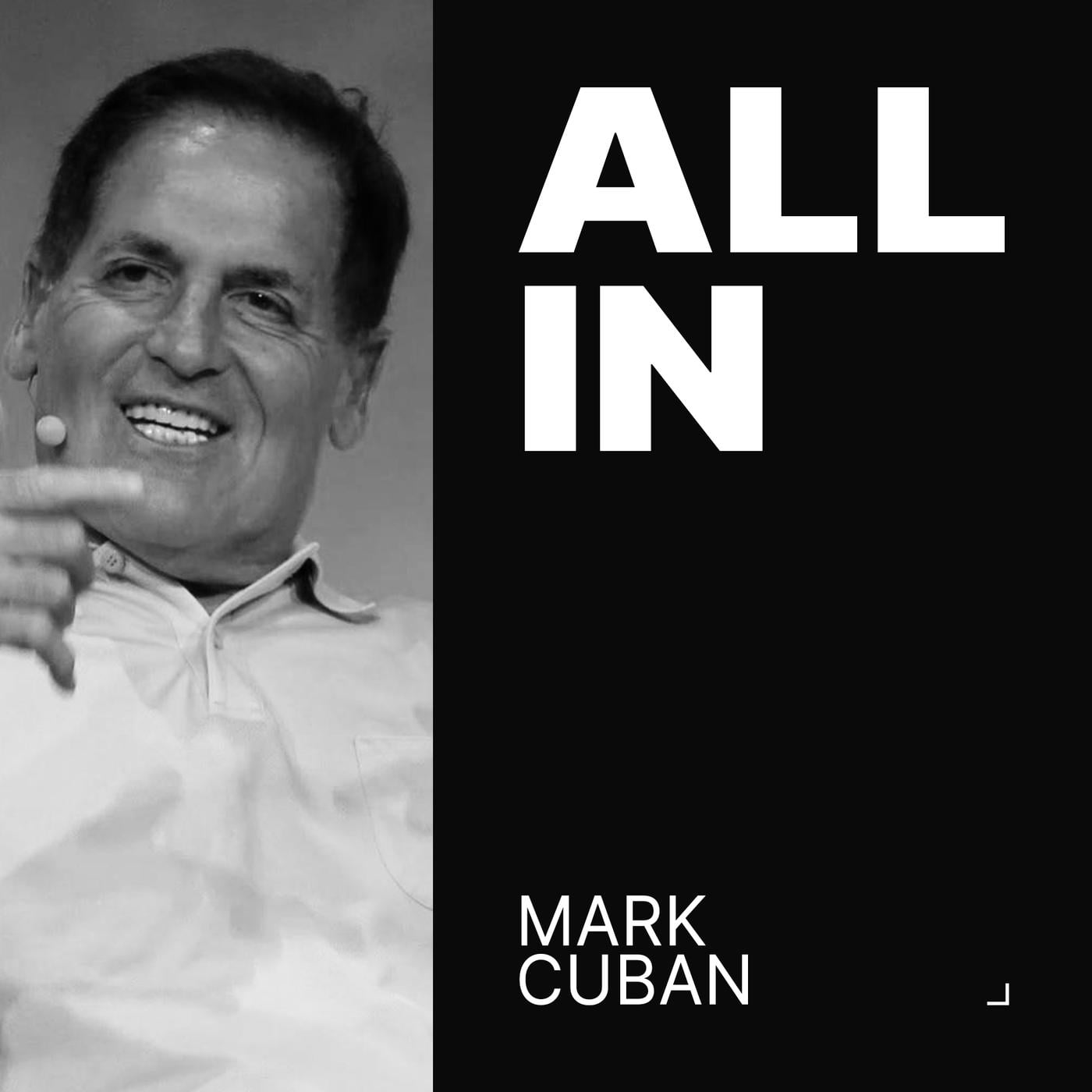
Jul 20, 2026 · 42 min
Mark Cuban warns of AI infrastructure risks but rejects dot-com comparison
Mark Cuban on the AI Bubble: Who Actually Gets Wiped Out?
Understanding the structural differences between the AI boom and past tech bubbles helps investors and founders navigate the current capital cycle.
- 1Private funding and a lack of public IPOs distinguish the current artificial intelligence wave from the dot-com crash.
- 2Enterprise AI adoption is slower than expected, but a massive productivity gap is opening between AI-literate and non-literate workers.
- 3New financial regulations and streaming media deals are driving parity and reshaping franchise valuations across the NBA.
The brief
Billionaire investor Mark Cuban joins the show to dissect the current artificial intelligence boom, comparing its market dynamics, funding structures, and public market presence to the historic dot-com bubble.
Unlike the late nineties, massive private capital and a lack of public IPOs are shielding today's AI market, though over-investing in data centers and infrastructure still poses a significant risk to late-stage investors.
In the enterprise, implementing AI is proving far more difficult than expected, yet a stark productivity gap is rapidly widening between employees who are AI-literate and those who are not.
Beyond technology, Cuban dives into the shifting financial landscape of the NBA, explaining how new league rules are creating parity and how streaming is reshaping sports franchise valuations.
What people are saying
Cuban’s “pickleball courts” warning reframes the AI bubble as a VC wipeout
Episode reactions
- Cuban’s central thesis landed: an AI bust would hurt VC, private equity and institutional investors more than ordinary retail investors.
- His “data centers turned into pickleball courts” warning became the episode’s most repeated image, echoing the 1990s fiber overbuild.
- The discussion split opinion: some accepted Cuban’s efficiency argument, while others expect cheaper AI to fuel even greater compute demand.
Wider topic conversation
- The fiber-optic analogy drove broader debate over whether AI infrastructure is being overbuilt ahead of efficiency breakthroughs.
- Commentators disputed Cuban’s hardware outlook, arguing that more efficient models could increase total demand rather than reduce data-center usage.
- The episode’s claims about AI’s lack of physical intuition and real-world context were widely shared alongside broader arguments about automation and employment.
Featuring
 Mark Cuban
Mentioned
Listen to the full episode and explore every guest, topic, and moment on PodLume.