
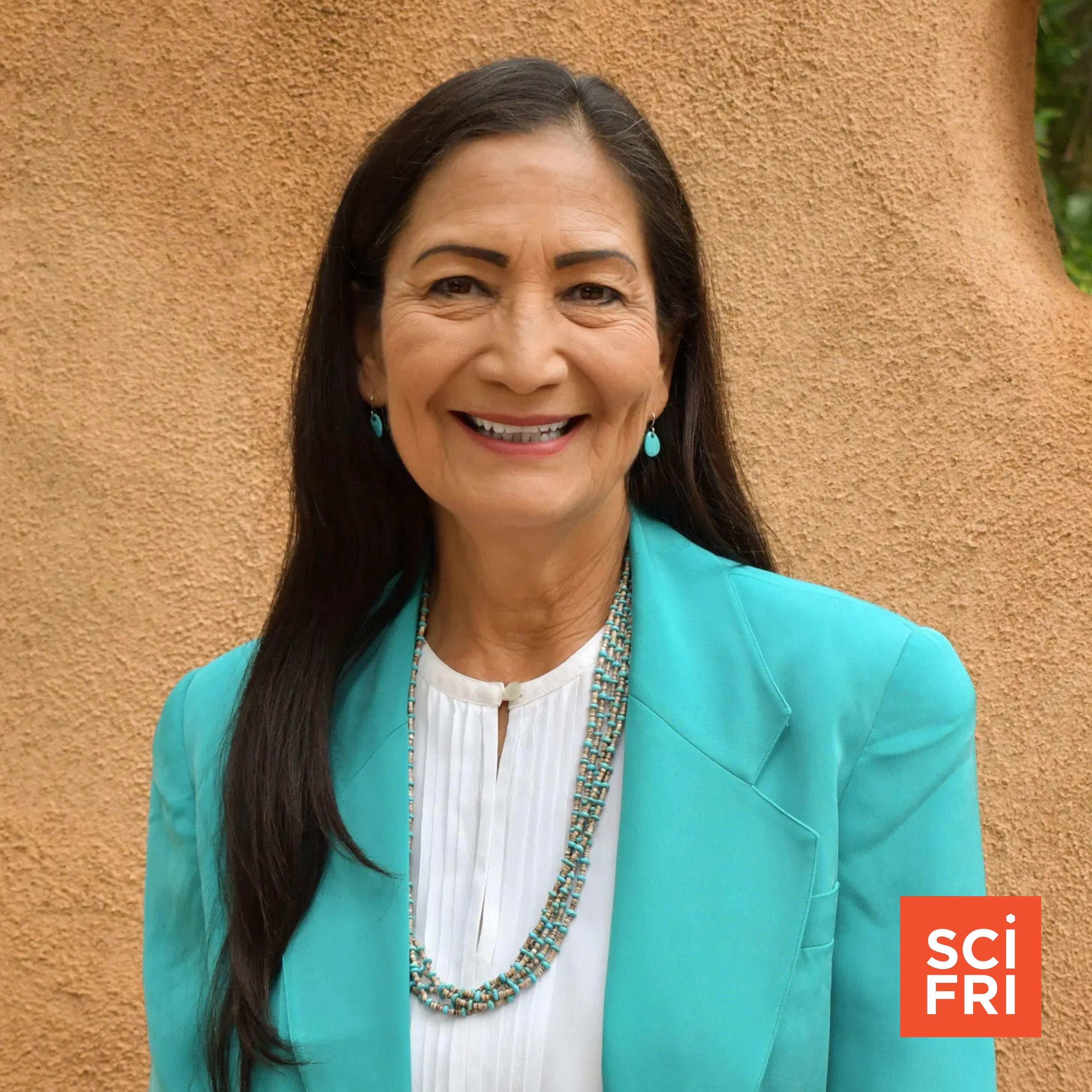
Aug 10, 2026 · 17 min
Haaland makes the case for science-led public lands management
Deb Haaland is a politician, and proud of it
The former Interior secretary explains how conservation, industry, tribal relationships, and climate action collide in managing the nation’s public lands.
- 1The Interior Department manages far more than parks, combining public lands, wildlife, science, and tribal responsibilities.
- 2Haaland argues that competing uses of public lands require sustainable management rather than choosing conservation or industry outright.
- 3Her memoir links political resilience and candid sobriety disclosures to a broader responsibility to protect nature.
Don't miss
Haaland recalls being moved to tears by Yosemite and Mount Whitney, connecting awe to the duty to protect Earth’s finite resources.
The brief
Deb Haaland discusses her memoir and historic role as the first Native American cabinet secretary, while resisting a simple choice between politician and organizer.
She maps the Interior Department’s sprawling responsibilities, from public lands and wildlife refuges to scientific agencies and relationships with federally recognized tribes.
The central policy tension is how to balance conservation, recreation, extraction, and industry; Haaland argues every use must become sustainable as climate change intensifies.
Haaland says lawsuits and scientific expertise are essential tools for climate action, then turns candid about alcoholism, failure, and the resilience built through a frequently changing childhood.
Her memories of Yosemite and Mount Whitney become an emotional argument for protecting a finite planet: awe can make environmental responsibility feel personal.
Featuring
 Deb Haaland
 Flora Lichtman
Mentioned
 A Voice Like Mine
 Bureau of Land Management
Books & mentions
Listen to the full episode and explore every guest, topic, and moment on PodLume.