
Aug 26, 2026 · 18 min
GPS turns military precision into everyday dependence
How GPS shaped our world
GPS guides modern life while remaining vulnerable to interference and widely misunderstood as a tracking system.
- 1GPS grew from wartime and Cold War navigation needs into an everyday civilian utility.
- 2Gladys West’s mathematical modeling of Earth and satellite motion helped make precise positioning possible.
- 3GPS receivers calculate location without reporting it back; tracking requires a separate device or service transmission.
Don't miss
Dunn explains how Gladys West’s modeling of Earth’s gravitational field and satellite trajectories underpins precise GPS positioning.
The brief
Katherine Dunn begins with the wonder of early GPS, then turns to its vulnerability: jamming and spoofing have made satellite navigation a cat-and-mouse game.
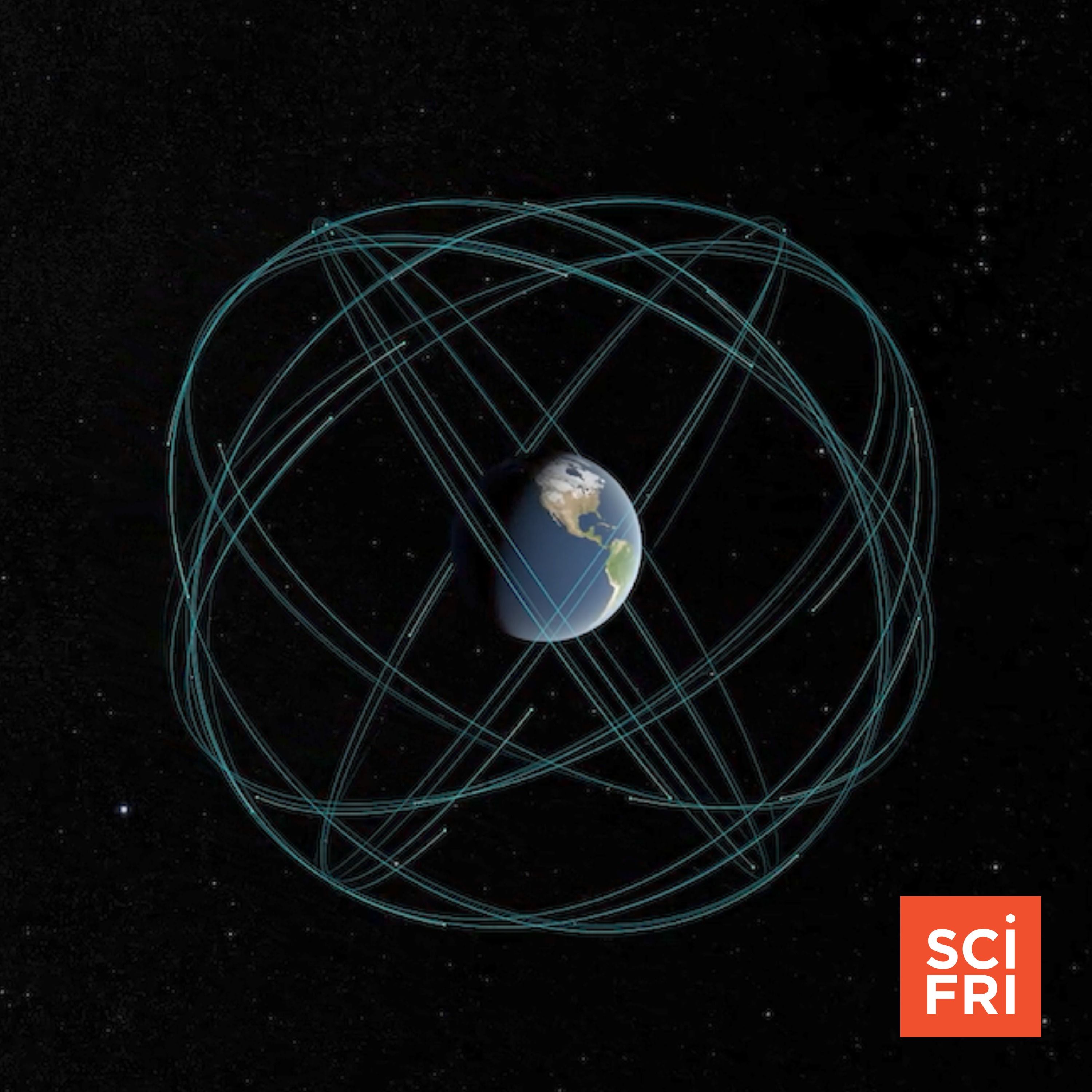
GPS works by comparing signals from multiple satellites to calculate location, altitude, and precise timing. The system is powerful, but interference can corrupt the answer.
Dunn traces GPS to military needs in World War II, the Cold War, and Vietnam, with space-race research supplying crucial scientific foundations.
A standout thread is Gladys West’s mathematical work modeling Earth’s gravitational field and satellite trajectories, a largely hidden foundation of modern navigation.
The episode also corrects a common privacy misconception: GPS itself receives signals one way; tracking begins only when another device or service transmits location data.
Featuring
 Little Blue Dot, How GPS Shaped the Modern World
 Vladimir Putin
 San Andreas Fault
Books & mentions
Listen to the full episode and explore every guest, topic, and moment on PodLume.