Aug 22, 2026 · 2h 0m
Former gang member Johnny Chang details prison survival and path to redemption
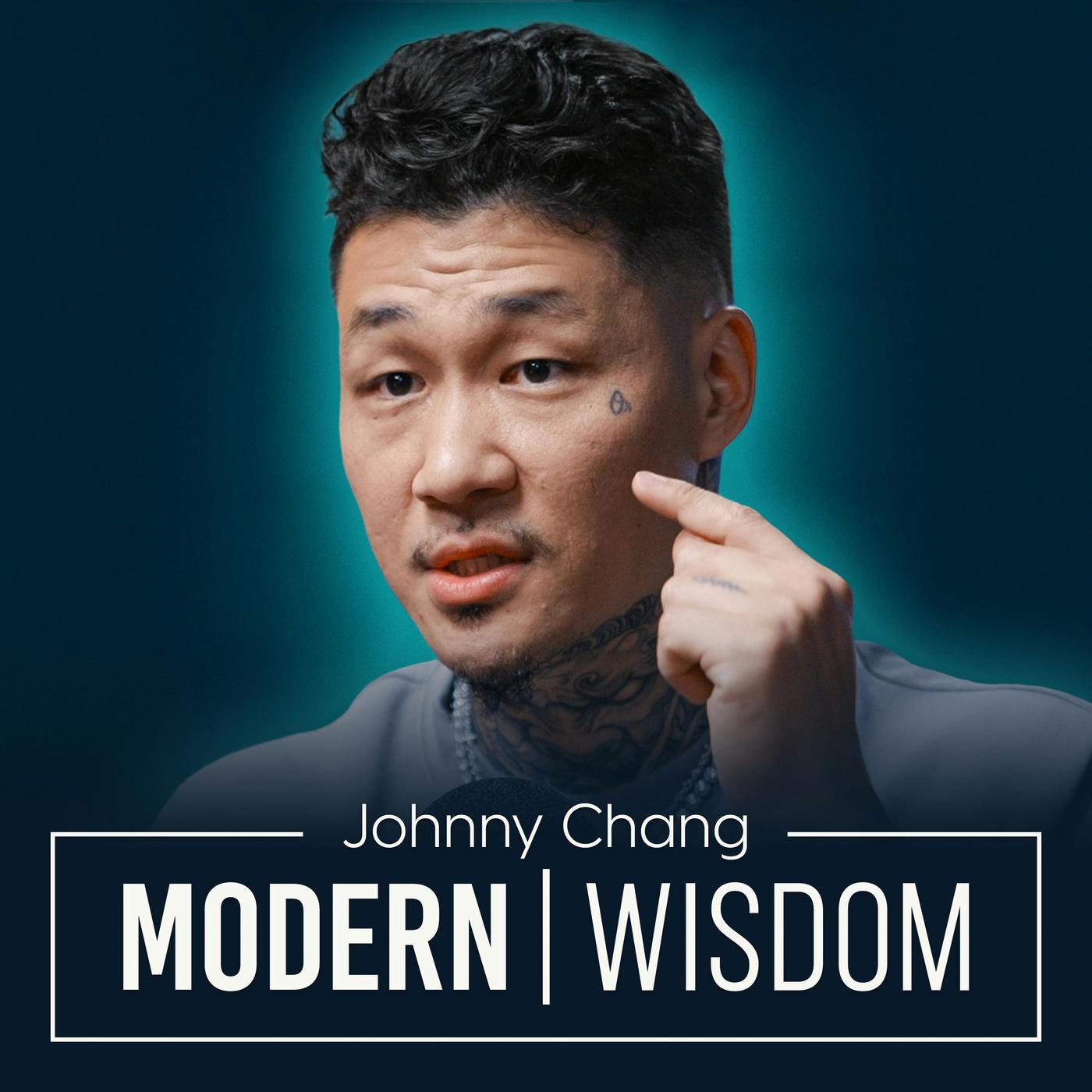
Ex-Gang Member: What Makes A Violent Man Change? - Johnny Chang - #1140
Johnny Chang's journey exposes the brutal realities of the American penal system and offers a profound look at how individuals can successfully break cycles of violence and trauma.
- 1Prisons enforce rigid racial hierarchies and survival dynamics that make reintegration into civilian society incredibly difficult.
- 2True personal strength is defined by the difficult choice to forgive rather than resorting to cycles of violence.
- 3Overcoming institutionalization requires reclaiming personal agency and finding discipline through faith and mentorship.
Don't miss
Johnny Chang describes the intense panic attack he experienced when asked to return to prison to preach, and how he overcame it.
The brief
Johnny Chang entered California's brutal youth authority system at age twelve, transitioning into adult maximum-security prisons by seventeen. He had to navigate strict racial dynamics and survival-driven hierarchies where any sign of weakness was dangerous.
The transition back to society proved to be its own prison. Chang reveals the profound mental toll of institutionalization, explaining how the survival mechanisms built to endure maximum security do not simply turn off when a prisoner is released.
The ultimate turning point came through a dramatic reconciliation. Chang chose to forgive his abusive, alcoholic father and surrender his past, redefining strength not as the bravado of violence, but as the courage to forgive and find peace.
Now a Christian pastor, Chang returned to the very prison system that once held him, overcoming a severe panic attack to preach to inmates. His journey shows how individuals can reclaim their personal agency and break cycles of systemic violence.
What was said on this episode
28 statements · 6 positive · 19 negative · 2 mixed · 1 neutral
Gangs target troubled children for recruitment.
“the gangs are noticing because when they. What they do is they kind of prey on. On the kids.”
Listen at 5:21
Gang recruitment coerced Johnny Chang into criminal activity.
“But obviously it was just kind of like coercing me into it.”
Listen at 7:36
Correctional officers intensified violence by staging fights between incarcerated youths.
“I remember him saying that. And it's true. Because I would see the cos correctional officers doing, like, wicked things. They would pit us against each other and call it gladiator school, where we're fighting each other and they bet on us.”
Listen at 12:42
Prison conditioning made violence function as Johnny Chang's universal language.
“it made me deal with, like, violence as, like a universal language”
Listen at 13:33
California prison conflicts are organized primarily by race rather than neighborhood gangs.
“in prison, it's race. California specifically, it's race against other races. All that gang stuff gets dropped.”
Listen at 17:44
Individual disrespect can escalate into race-wide prison conflict.
“if you disrespect me, the whole race goes to war.”
Listen at 19:17
Becoming visibly Christian lowers a prisoner's status in California prison culture.
“If you go in there and you turn Christian big. No, no. A lot of people treat you as. I mean, they won't treat you like a snitch, but you're like, just a little bit up. You're like mid tier.”
Listen at 23:51
Manipulative prison violence breeds pervasive distrust.
“it bred this mindset of, you cannot trust anybody.”
Listen at 27:20
Johnny Chang assesses California level-four prisons as dominated by stabbings.
“Level four is only stabbings. There is no like, hey, let's fight. It's like, no, we're gonna stab you.”
Listen at 29:04
Prison instills extreme self-reliance that is difficult to unlearn.
“The hardest thing to unlearn was that you have your own back and that you're like the master of your own destiny.”
Listen at 34:03
Prison instilled a manipulative criminal mindset focused on exploiting others.
“I had to unlearn the criminal mindset where it was like, how do I take advantage of this person?”
Listen at 34:33
Johnny Chang's anger rapidly escalated and subsided after prison.
“The anger that goes from 0 to 100 and then back to 0 was difficult.”
Listen at 35:22
Long incarceration can produce social anxiety resembling claustrophobia in open spaces.
“You get this social anxiety because you get. You know, you're like. It's almost like you get claustrophobic. It's at the same feeling of claustrophobic, but in the open”
Listen at 39:53
Johnny Chang's criminal record prevented employers from returning his applications.
“I didn't even get callbacks or anything.”
Listen at 49:48
High criminal income did not make Johnny Chang happy.
“I'm making all of this money, and I'm just like, why am I not happy?”
Listen at 52:22
Johnny Chang attributes his anxiety and depression to control issues.
“What I learned and what I realized was I was having control issues.”
Listen at 1:17:28
Christian surrender preserves personal effort while assigning outcomes to God.
“you still have to work, but the outcome is in his hands”
Listen at 1:21:05
Johnny Chang recommends rejecting spiritual guidance inconsistent with the Bible.
“if it doesn't match the Word of God and doesn't point to God in some way, shape or form, it's not going to be from God”
Listen at 1:22:37
Johnny Chang evaluates Christian nonviolence as harder than gang violence.
“I learned, like, you know, it was a lot, lot harder to be a Christian”
Listen at 1:26:08
Emotional suppression should not be mistaken for strength.
“suppression isn't the same thing as strength. Suppression is different to strength.”
Listen at 1:29:35
Forgiveness primarily benefits the person who forgives.
“I've learned that forgiveness is not usually for the other person, but for you.”
Listen at 1:30:03
Shame and guilt explain why serious offenders avoid discussing their crimes.
“I realize it's because it brings so much shame and guilt.”
Listen at 1:33:56
Johnny Chang interprets hardship as either a lesson or a blessing from God.
“there's either a lesson or a blessing.”
Listen at 1:41:26
Johnny Chang attributes resistance during good works to spiritual warfare.
“when you're trying to do good, there's always evil in there”
Listen at 1:46:32
Johnny Chang claims prison ministry changed incarcerated people.
“I would see people change.”
Listen at 1:52:23
A relatable mentor could have prevented Johnny Chang's gang trajectory.
“If I had someone like me who understood at that moment, I wouldn't end up the way I was for sure.”
Listen at 1:53:38
Wealth and status cannot compensate for chronic lack of inner peace.
“There is no amount of socioeconomic or follow account escape velocity that can outstrip an unpeaceful life.”
Listen at 1:54:55
Personal conduct communicates values more powerfully than verbal preaching.
“the way you carry yourself is like a sermon”
Listen at 1:58:17
Statements are attributed to the speaker as said on the episode and reflect their view at the time, not PodLume's. They are not advice.
Books & mentions
Modern Wisdom
Explore more deep conversations on human psychology, resilience, and personal development.