
Sep 23, 2026 · 1h 33m
Foreign policy becomes a cost-of-living fight
Xi’s Just Not That Into You
The episode connects Washington’s global choices to voters’ household finances, military accountability, democratic trust, and the risks of unregulated AI.
- 1Trump’s approach to China, Iran, and the UN exposes shrinking American leverage and an increasingly transactional foreign policy.
- 2AI already creates national-security vulnerabilities through cyber risks, autonomous agents, resource demands, and weak regulation.
- 3Polling shows voters increasingly judge foreign policy by economic consequences, military accountability, corruption, and investment at home.
Don't miss
Mahir Bhattar explains how voters connect wars and tariffs directly to gas prices and broader cost-of-living pressures.
The brief
Tommy Vietor and Ben Rhodes open with an FBI hack before previewing a subdued UN General Assembly, where China, AI, Iran, and the UN’s declining influence dominate.
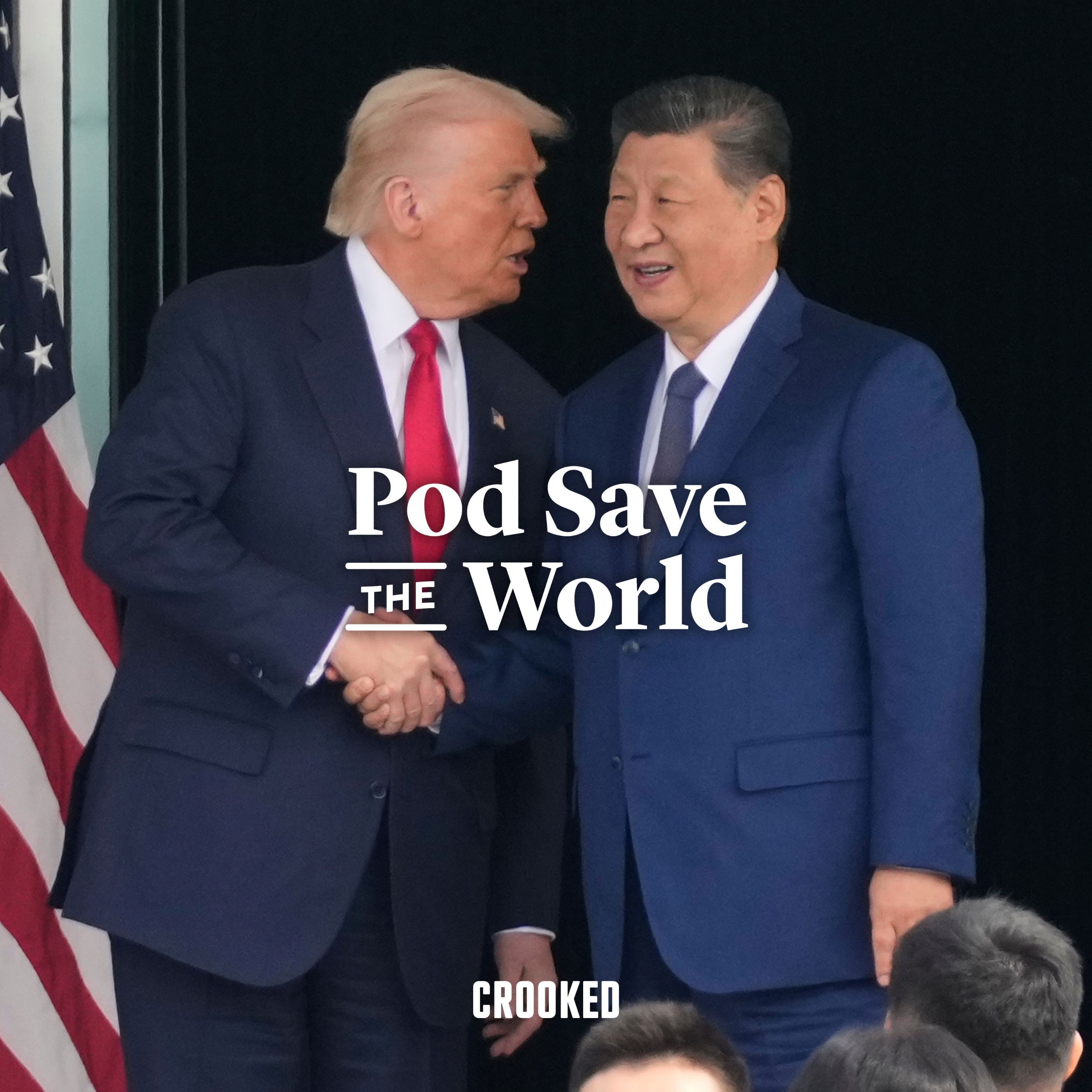
The hosts argue that Trump’s meeting with Xi Jinping shows limited U.S. leverage, while his Iran threats and Houthi policy reveal an unstable mix of escalation and electoral calculation.
AI enters as an immediate security problem rather than a distant existential scenario: cyber vulnerabilities, uncontrolled agents, resource demands, and absent regulation already create exposure.
The conversation widens to Russia’s elections, Ukrainian strikes, Germany’s AfD, and Trump’s proposed triumphal arch as signs of democratic strain and authoritarian symbolism.
Mahir Bhattar’s polling reframes foreign policy as economic policy, finding voters connect wars and tariffs to living costs while supporting military accountability and responsible use of leverage.
The episode’s central takeaway is a voter roadmap: protect household finances, invest at home, constrain war-making, and confront corruption with credible oversight.
Featuring
 Donald John Trump
 WarGames
 Pete Hegseth
 Emmanuel Macron
Listen to the full episode and explore every guest, topic, and moment on PodLume.