
Sep 6, 2026 · 47 min
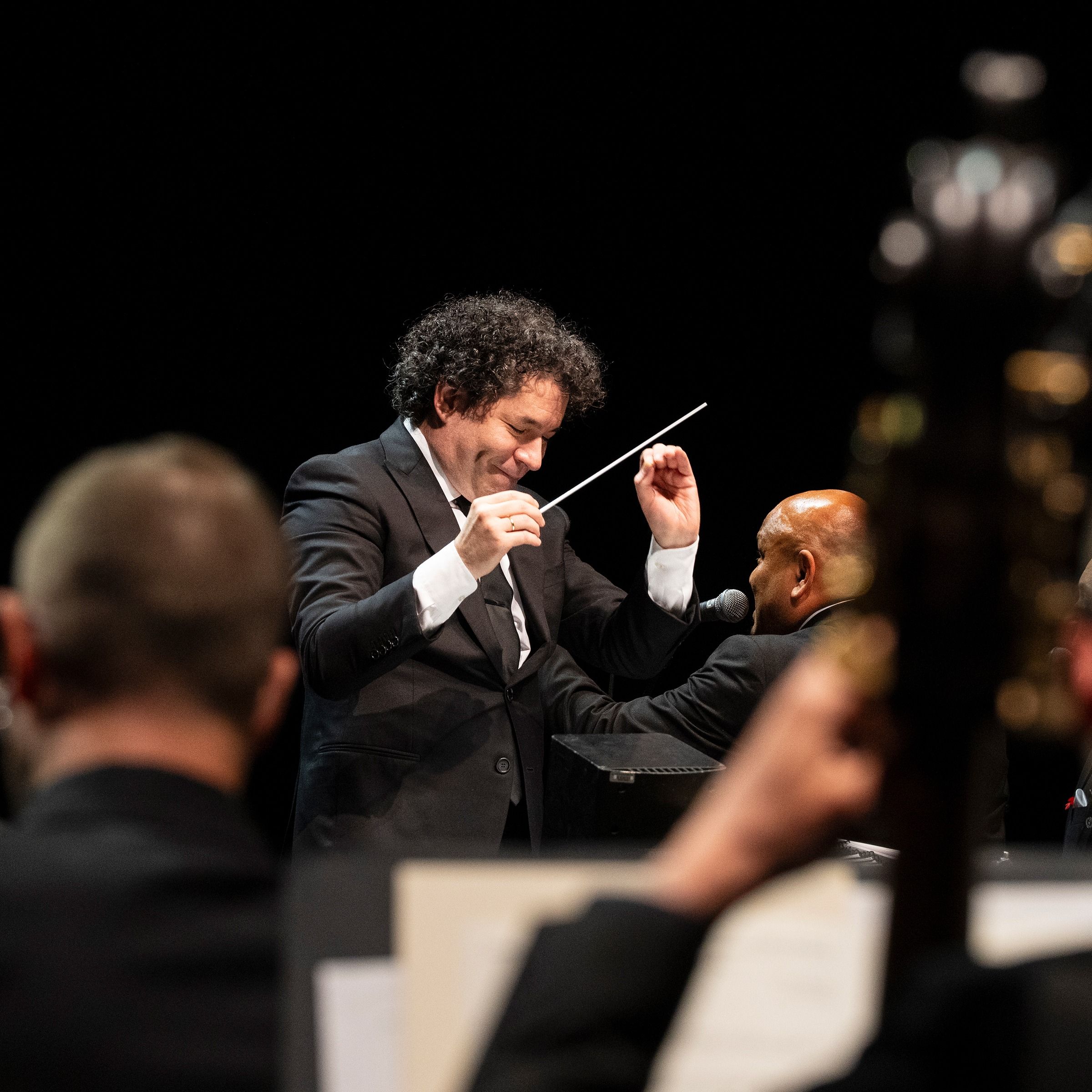
Dudamel bets celebrity can revive classical music
Classical Music Is in Crisis. Gustavo Dudamel Is Here to Save It.
Gustavo Dudamel’s New York appointment tests whether energy, accessibility, and cultural visibility can reverse classical music’s aging audience and institutional decline.
- 1Dudamel’s rise through Venezuela’s El Sistema and Los Angeles made him classical music’s rare pop-culture star.
- 2His Los Angeles strategy paired ambitious programming with celebrity, film music, Spanish-language communities, and broader outreach.
- 3New York will measure his success through audience age, diversity, and whether the Philharmonic becomes more central to city life.
Don't miss
The discussion compares older and newer recordings of Beethoven’s Fifth Symphony to show how Dudamel’s conducting gained patience, precision, and confidence.
The brief
Gustavo Dudamel arrives in New York as one of classical music’s most recognizable figures, bringing celebrity and exuberance to an orchestra often seen as formal and remote.
Joshua Barone traces classical music’s lost mass audience from the era of Arturo Toscanini and Leonard Bernstein to aging listeners, an uninviting hall, and weaker cultural visibility.
Dudamel’s Los Angeles tenure offers the model: he connected the orchestra to Hollywood, film music, Spanish-language and immigrant communities, contemporary composers, and new listeners.
The episode also tests the limits of charisma, comparing Dudamel’s early unevenness with the patience and precision he developed in later performances of Beethoven’s Fifth Symphony.
His New York experiment will be judged by whether ambitious programming and unconventional venues make the Philharmonic younger, more diverse, and more central to city life.
Featuring
 Gustavo Dudamel
 Leonard Bernstein
 LA Philharmonic
 John Adams
 Lincoln Center
Listen to the full episode and explore every guest, topic, and moment on PodLume.