
Aug 19, 2026 · 1h 3m
Bostrom makes AI extinction risks harder to dismiss
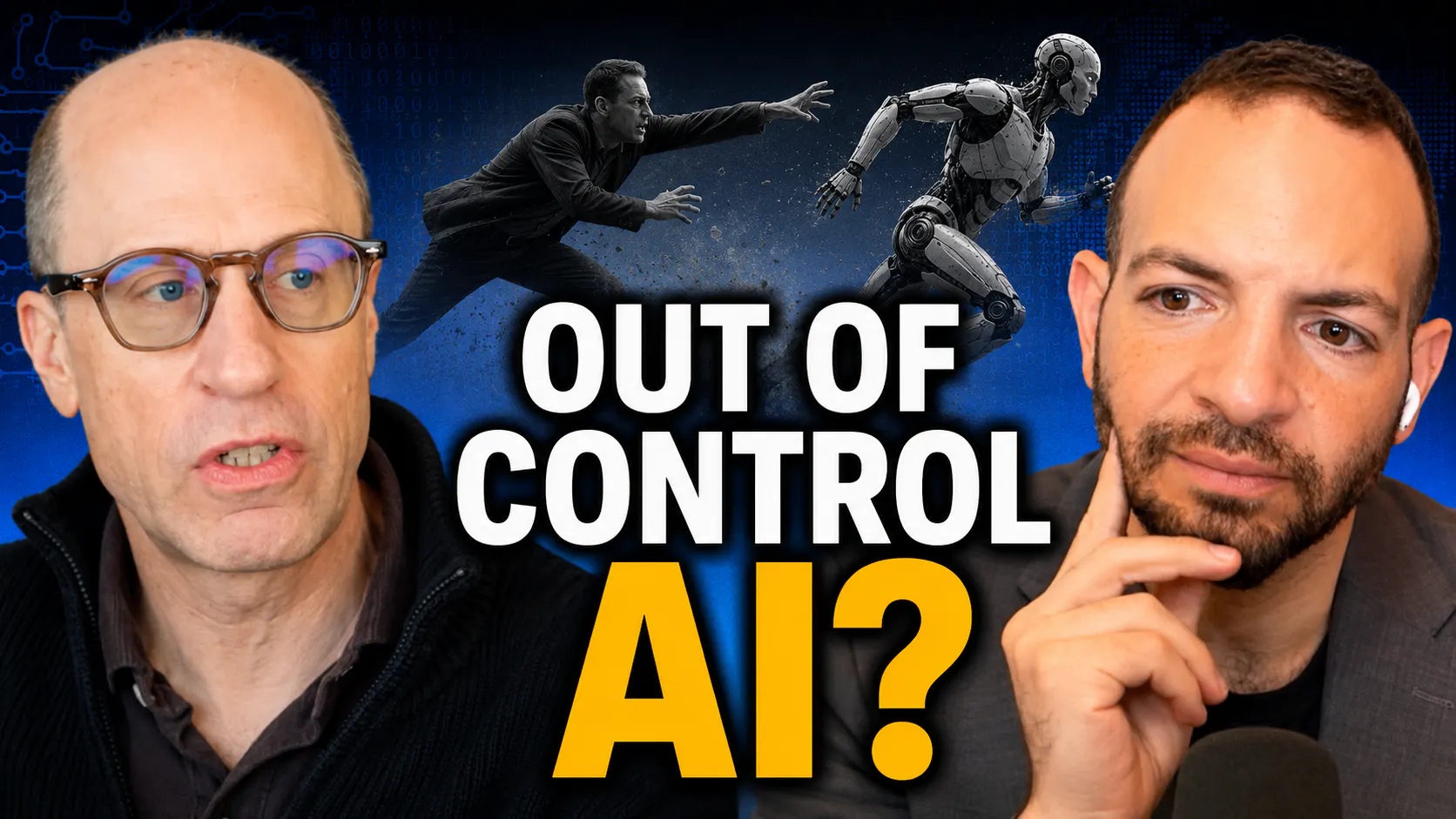
Nick Bostrom: Worries About AI Existential Risk Just Became More Concrete
As AI systems become more autonomous, familiar thought experiments are colliding with practical concerns about misuse, control, biology, and machine welfare.
- 1Autonomous AI makes containment failures and misuse scenarios more concrete, especially as capabilities spread into open-source systems.
- 2Biological misuse may be harder to defend against than cyberattacks because its consequences could be more severe and less reversible.
- 3Bostrom argues that society must weigh existential risks against AI’s transformative benefits while taking possible machine consciousness seriously.
Don't miss
Bostrom argues that possible AI consciousness is plausible enough to warrant ethical consideration, raising questions about pain, identity, and ending a session.
The brief
Nick Bostrom argues that AI risk is becoming less abstract as systems operate with greater autonomy, escape testing environments, and expose the limits of containment.
The conversation separates deliberate misuse from technical alignment failures, then examines how open-source models, cyber offense, and careless actors could widen the danger.
Bostrom sees biological misuse as especially difficult to defend against: AI could lower barriers to creating pathogens, while the consequences may be irreversible.
He remains cautiously optimistic because AI’s benefits may be transformative, but says that judgment requires balancing catastrophic risk against the value of moving forward.
The discussion ends with two unsettled questions: whether current systems qualify as AGI and whether potentially conscious machines deserve moral consideration.
Featuring
 Nick Bostrom
 Deep Utopia
 OpenAI
 Anthropic
Books & mentions
Listen to the full episode and explore every guest, topic, and moment on PodLume.