
Sep 20, 2026 · 24 min
AppLovin turns a near-collapse into an advertising machine
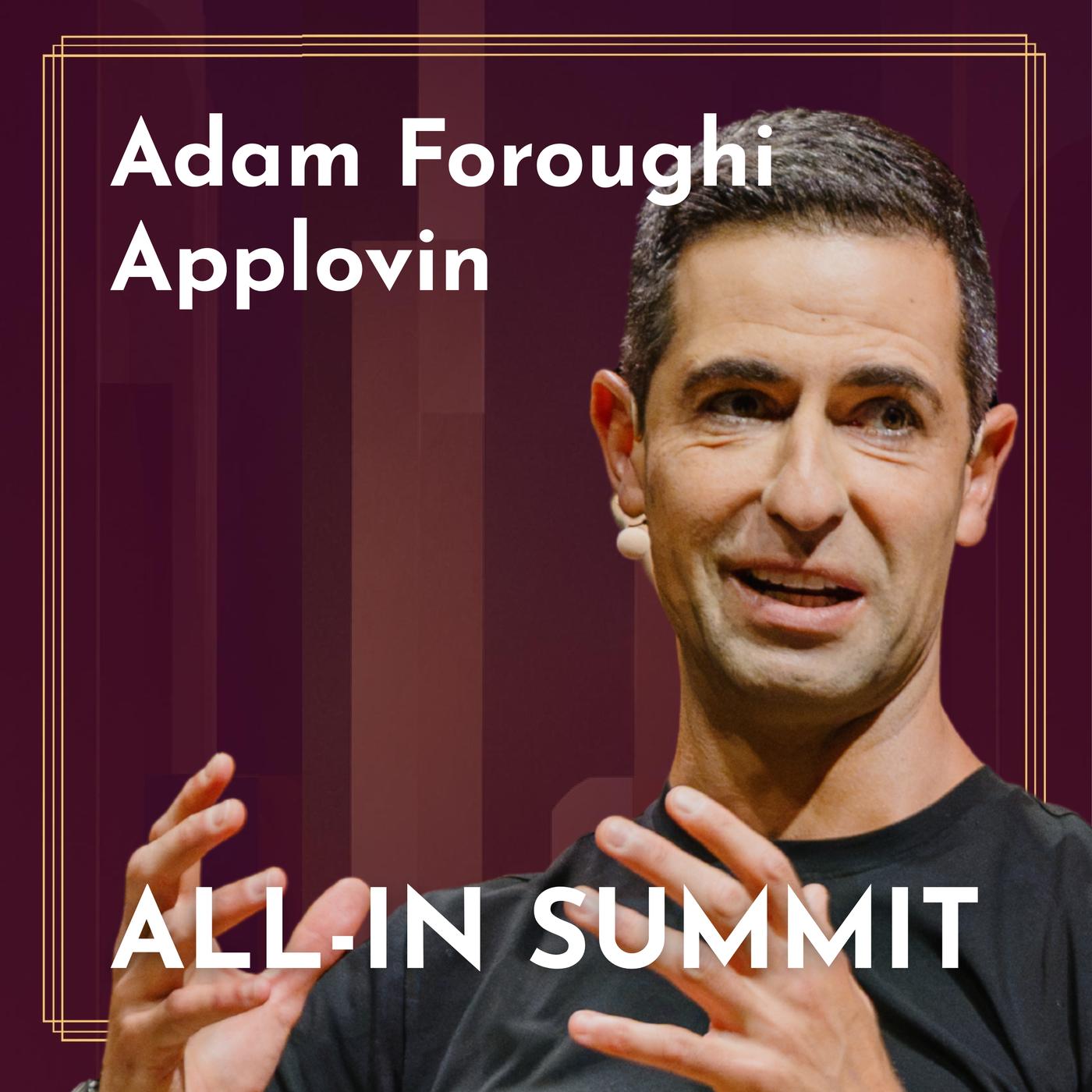
Adam Foroughi, Applovin CEO: Surviving a 92% Drawdown, Ads as ML 1.0 & the $50B Game Ad Market
The conversation shows how specialized data, deep learning, and disciplined execution can challenge the scale advantages of Google and Meta.
- 1AppLovin evolved from mobile-game monetization into a major advertising and machine-learning business.
- 2A 92% valuation collapse forced AppLovin to preserve its team while rebuilding around deep-learning systems.
- 3AI agents may automate routine purchases, but discovery platforms still shape what consumers notice and buy.
Don't miss
Foroughi recounts how AppLovin moved from a $3.8 billion valuation toward a much larger market capitalization after deep learning transformed advertiser returns.
The brief
Adam Foroughi traces AppLovin’s rise from mobile-game monetization to an advertising business built around recommendation systems, deep learning, and transactional outcomes.
He argues advertising was an early major machine-learning application, while AI assistants may capture purchase intent without replacing the discovery that creates new demand.
The company’s valuation fell from roughly $40 billion to $3.8 billion before a shift from regression models to deep learning sharply improved advertiser returns.
Foroughi says AppLovin acquired game studios to obtain training data, then sold them once third-party data became available amid privacy changes from Apple and Europe.
The broader bet is that lean, specialized teams can compete with Google and Meta when differentiated data, model scale, and execution produce better advertiser economics.
What was said on this episode
21 statements · 17 positive · 2 negative · 2 neutral
Mobile gaming attracts approximately $50 billion in annual advertising spending.
“there's probably about $50 billion of advertising being spent every single year in this mobile gaming ecosystem”
Listen at 2:11
Deep-learning models can turn mobile-game audiences into shopper-behavior opportunities.
“deep learning models have gotten so powerful now that you could take that same space and try to take that adult and give them a shopper behavior experience”
Listen at 2:49
Advertising was an early implementation of technologies now driving artificial intelligence.
“Advertising is like ML 1.0, but really was the first implementation of all these technologies that now are driving AI today.”
Listen at 3:35
Large-language-model research can transfer to recommendation systems.
“a lot of the research that's being done in the space, in the large language model space, can port to recommendation systems”
Listen at 4:03
Improved advertising technology can recommend highly relevant products to users.
“the technologies have gotten so good at recommending something relevant to someone”
Listen at 5:26
Large-language-model advertising will primarily compete with Google Search advertising.
“that ads model is almost going to exclusively compete with the Google search business”
Listen at 6:35
Discovery advertising creates additional economic activity.
“you create economic expansion”
Listen at 7:38
AppLovin does not track users’ precise location for advertising.
“I don't think advertising companies can track location, so we don't track location at all.”
Listen at 9:00
Better advertising technologies increase GDP growth.
“The better these technologies get, faster GDP growth.”
Listen at 10:00
AppLovin should repurchase its own shares when market valuation is depressed.
“Let's start buying our own stock. Let's become our best investor.”
Listen at 12:15
AppLovin repurchased roughly $6 billion of stock, retiring 20–25% of shares.
“we bought roughly $6 billion of the company's stock. Retired 20 to 25% of the shares outstanding.”
Listen at 12:23
AppLovin’s deep-learning model improved advertiser returns and accelerated company growth.
“We went from a regression model to a deep learning model. And the outcome was we're driven by our advertising algorithm. The better it works, the better advertiser return is on our platform”
Listen at 13:51
AppLovin’s share price rose from $9 to $750 over 2.5 years.
“We ended up going from $9 to $750 a share in a matter of 2.5 years.”
Listen at 15:20
Clear privacy regulation enables technology companies to meet defined requirements.
“you need privacy regulation so that technology companies can do exactly what's expected of them”
Listen at 16:59
Relevant advertising helps consumers discover products.
“consumers do want relevant ads. It helps them discover products.”
Listen at 17:05
AppLovin acquired game studios primarily to obtain training data.
“We bought them originally as a data play.”
Listen at 18:01
Some consumers will use agents to automate routine shopping behavior.
“part of the world will start using things like agents to optimize certain shopper behavior that's consistent”
Listen at 18:55
Average shoppers will adopt shopping agents less rapidly than technology enthusiasts expect.
“I just don't think— I think we really over-index on the Twitterverse and forget that the average shopper is not that cool.”
Listen at 19:54
Focused, lean companies can compete successfully against much larger technology companies.
“there's this ability to take on giants if you're very focused, you remain lean, and you can just move faster than them.”
Listen at 20:54
AppLovin’s EBITDA margin is approximately 84%, among the highest in its market.
“our EBITDA margins, I think, are number one in the market. It's 84%.”
Listen at 21:34
Scaled models adopted by large communities create difficult-to-replicate competitive moats.
“the power of a model that then reaches a point of scale and gets adopted by a large-scale community becomes something that is a moat that is hard for other people to overcome.”
Listen at 22:53
Statements are attributed to the speaker as said on the episode and reflect their view at the time, not PodLume's. They are not advice.
Featuring
 AppLovin
 Meta
Meta Apple Inc.
 ChatGPT
Listen to the full episode and explore every guest, topic, and moment on PodLume.