
Sep 8, 2026 · 30 min
America’s shipbuilding gap becomes a defense emergency
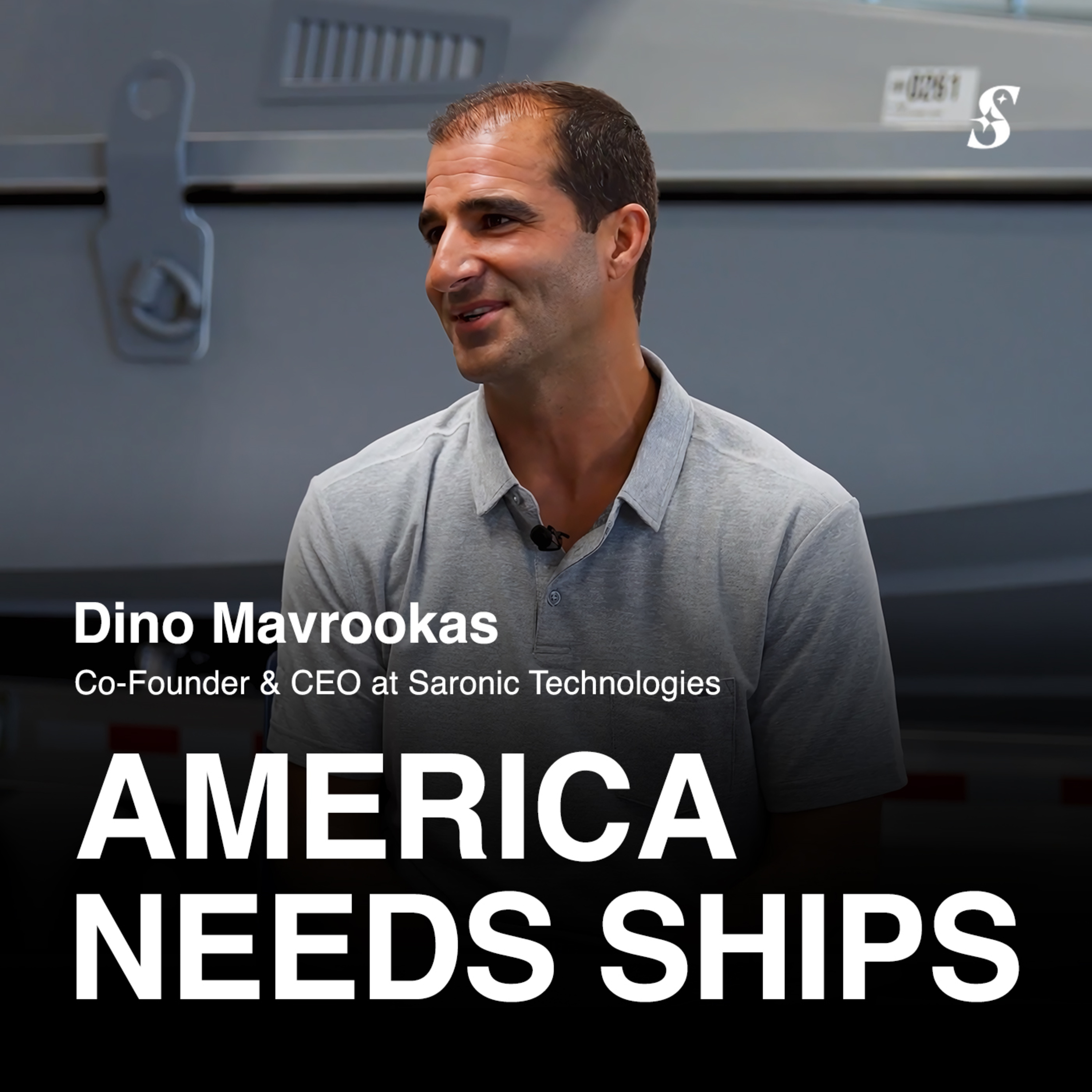
Dino Mavrookas: America Needs to Build Ships Again
The episode connects America’s shrinking maritime industrial base to military vulnerability and examines whether autonomy and commercial production can reverse it.
- 1China’s shipbuilding advantage exposes the strategic cost of America’s reduced naval and commercial capacity.
- 2Saronic pairs autonomous vessels with private capital, commercial production, and direct defense partnerships to scale faster.
- 3Port Alpha represents a bet that autonomy can revive U.S. shipbuilding while reshaping the wider maritime industry.
Don't miss
Mavrookas describes a partnership to launch a containerized hypersonic missile from Saronic’s autonomous Marauder vessel.
The brief
Dino Mavrookas, a former SEAL and private-equity investor, explains why Saronic sees America’s shrinking shipbuilding base as a national-security problem rather than a narrow industrial concern.
The central imbalance is China’s ability to produce ships at far greater scale, while U.S. defense procurement remains slow and specialized orders have weakened the domestic supply chain.
Saronic’s response combines autonomous vessels, private funding, commercial shipbuilding, and direct partnerships, including a plan to test a containerized hypersonic missile from the Marauder.
Port Alpha, the company’s planned shipyard in Brownsville, Texas, embodies the larger wager: industrial-scale production can return to the United States as autonomy spreads across maritime commerce and defense.
Mavrookas’s broader forecast is that autonomy will organize the entire maritime industry, making shipbuilding capacity and software-driven systems inseparable parts of national power.
Featuring
 Port Alpha
 United States
Books & mentions


Listen to the full episode and explore every guest, topic, and moment on PodLume.