
Aug 22, 2026 · 28 min
AI-generated code widens software security’s trust gap
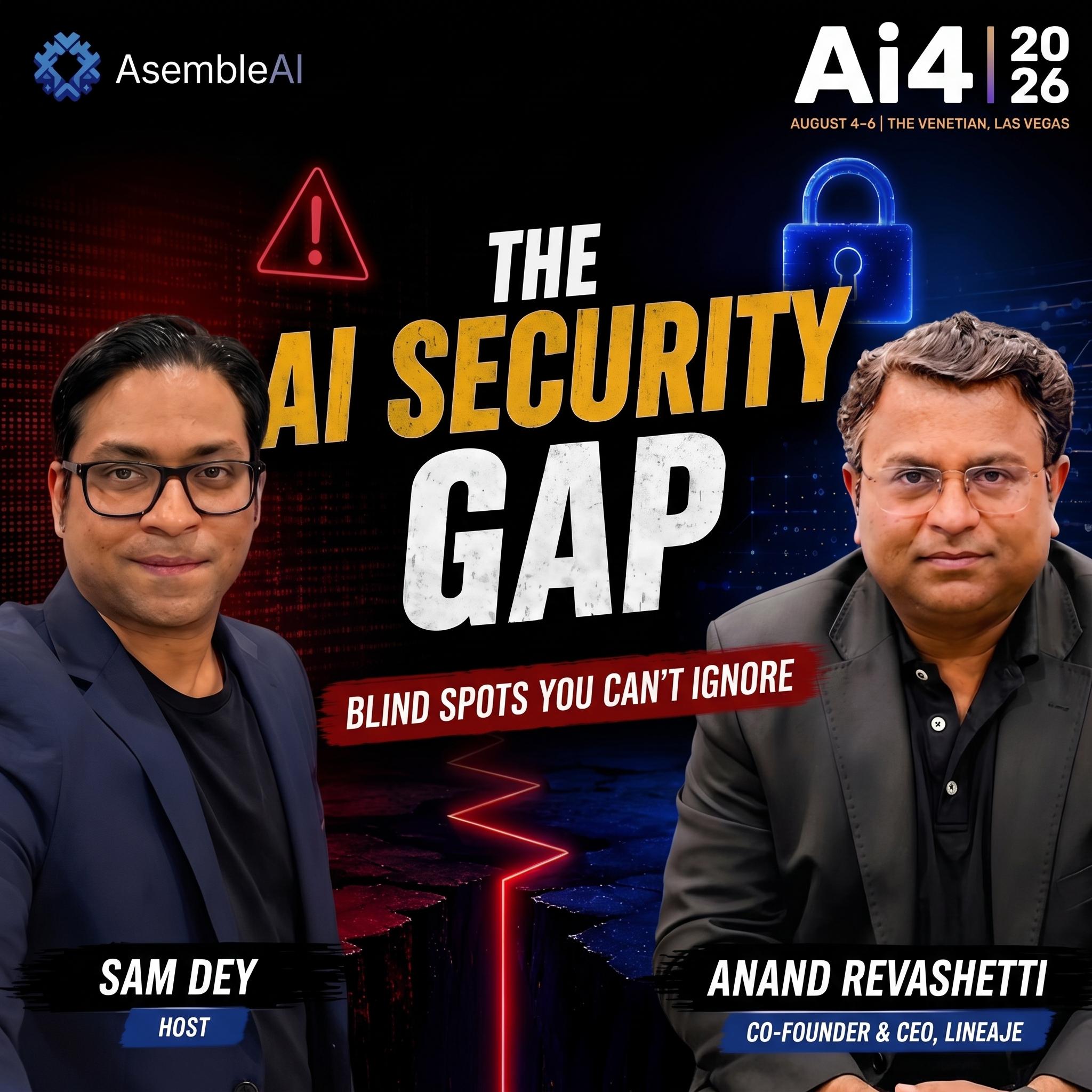
EP 56: Ai4 Podcast - Why AI-Generated Code Needs Its Own Kind of Security | Anand Revashetti, Lineaje
As AI accelerates code production and deployment, organizations need continuous visibility and human judgment to govern software they cannot realistically review line by line.
- 1AI-generated code increases software volume and deployment speed faster than traditional security review can handle.
- 2Lineaje maps software provenance and applies policy throughout development, deployment, and post-deployment maintenance.
- 3AI is likely to expand cybersecurity work because more generated code creates more dependencies, vulnerabilities, and oversight demands.
Don't miss
Anand Revashetti argues that AI will create more cybersecurity work, not eliminate it, because vastly more code also means more vulnerabilities and dependencies.
The brief
Sam Cooper and Anand Revashetti frame AI-generated code as a visibility problem: adoption is accelerating, but security teams may not know what software contains or where it came from.
AI tools raise perceived developer productivity while multiplying code and deployment frequency, creating a trust gap that traditional checkpoints cannot reliably close.
Revashetti describes Lineaje’s continuous approach, which assesses development environments, code generation, builds, deployment, and existing software rather than stopping at one review.
The conversation’s sharpest tension is human capacity: AI can generate code at a scale that exceeds practical review, making AI-assisted security analysis and experienced oversight necessary.
The closing argument reverses the job-apocalypse framing: more AI-generated software may create more vulnerabilities, dependencies, and demand for cybersecurity expertise.
Featuring
Listen to the full episode and explore every guest, topic, and moment on PodLume.