
Aug 18, 2026 · 33 min
A carrier’s long deployment exposes the Navy’s fragile logistics
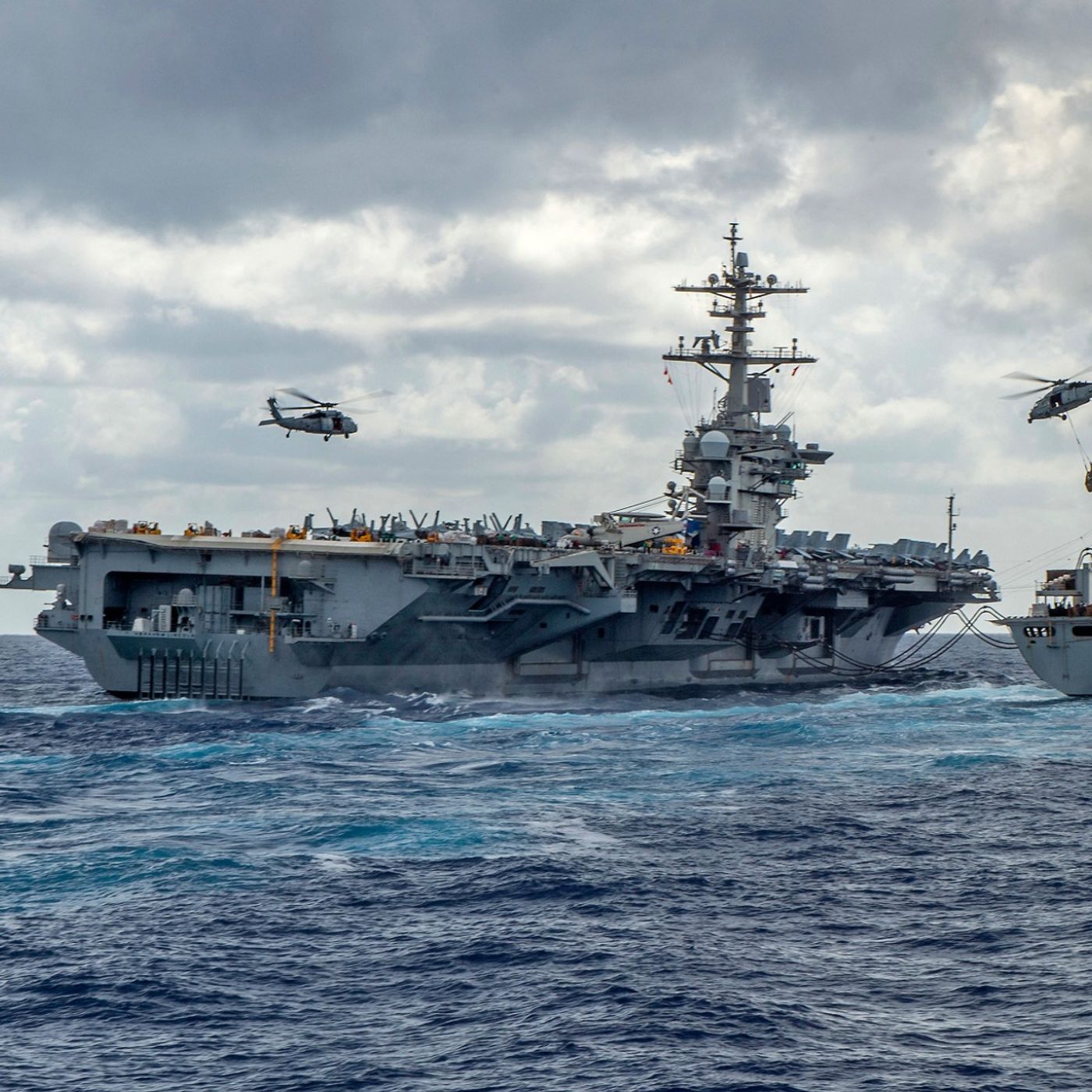
What Went Wrong on the U.S.S. Lincoln?
The Lincoln’s worsening conditions show how a damaged supply network and too few carriers can turn operational pressure into a readiness crisis.
- 1Nearly nine months at sea left Lincoln sailors exhausted, undersupplied, disconnected from home, and increasingly worried about mental health.
- 2The destruction of Bahrain’s logistics hub lengthened supply routes and made food, mail, maintenance, and port access harder to sustain.
- 3The carrier shortage forced the Navy to stretch deployments, delay relief, and accept broader risks across multiple regions.
Don't miss
John Ismay links sailors’ basic hardships aboard the Lincoln to the destruction of Bahrain’s logistics hub and the Navy’s wider carrier shortage.
The brief
After nearly nine months at sea, sailors aboard the USS Lincoln faced poor food, disrupted mail, exhaustion, and mounting concern about their mental health.
John Ismay, a former Navy serviceman and New York Times Pentagon reporter, explains how an open-ended deployment eroded morale and trust in official reassurances.
The crisis was not only about life aboard ship: the destruction of a Bahrain logistics hub lengthened routes, endangered port calls, and disrupted essential support.
With nearby ports exposed to Iranian weapons, the Navy struggled to handle maintenance and resupply while relying on distant, vulnerable alternatives such as Diego Garcia.
The carrier shortage magnified the problem, consuming available ships and pulling the USS George Washington from its emergency reserve role as relief for Lincoln remained uncertain.
Featuring
 John Ismay
 Navy
Navy Bahrain
 Strait of Hormuz
 Diego Garcia
Listen to the full episode and explore every guest, topic, and moment on PodLume.