
Sep 3, 2026 · 10 min
A board game confronts the brutal logic of the retail shelf
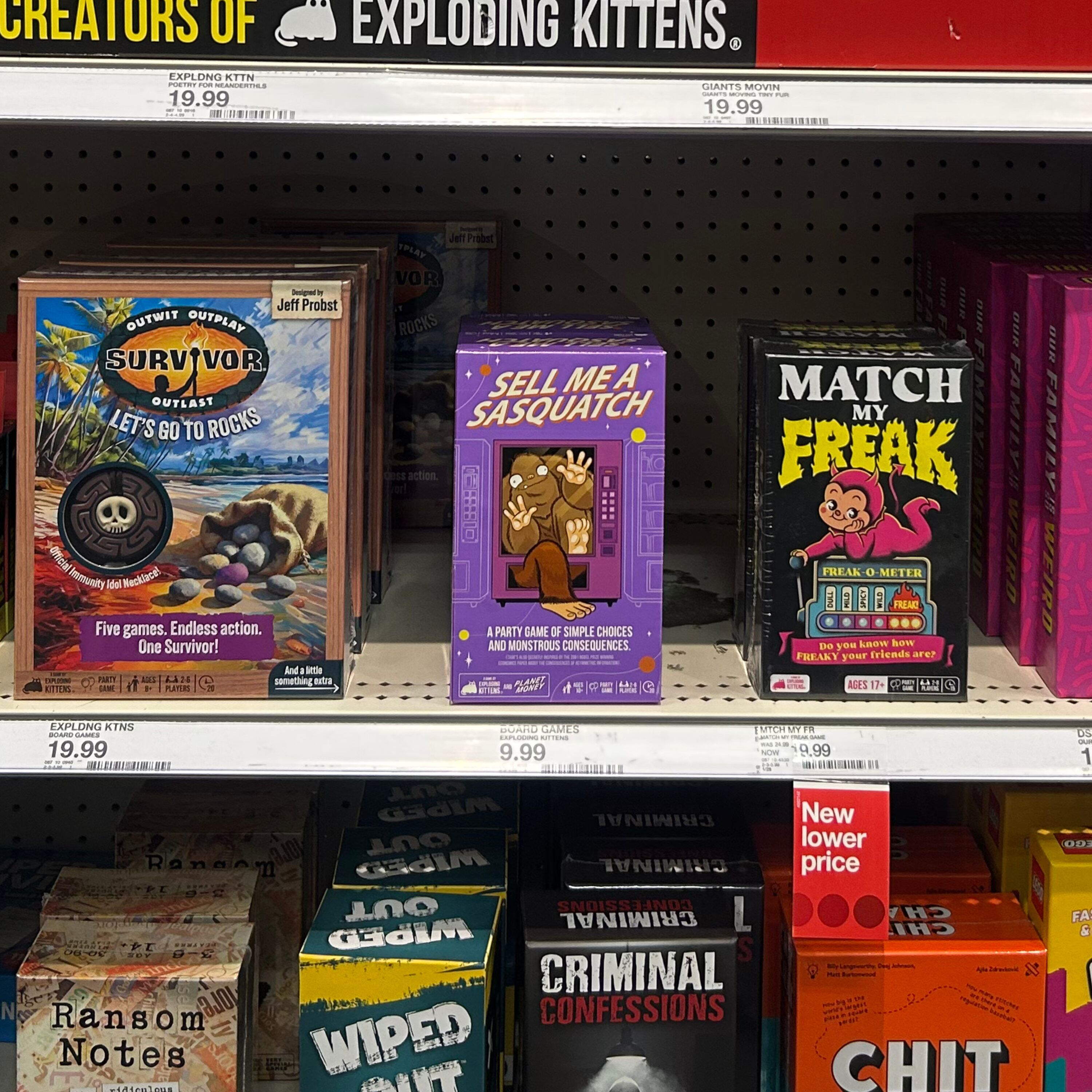
Does Planet Money’s game pass the shelf test? We go undercover to find out
The episode shows how simple store tests can expose packaging failures before launch, while offering no guarantee that a product will succeed.
- 1Sell Me a Sasquatch struggled to stand out because its typography, colors, and shelf visibility weakened its first impression.
- 2The game's back-of-box explanation confused a shopper, revealing that packaging must communicate the product without a sales pitch.
- 3Exploding Kittens' shelf tests find obvious problems efficiently, but cannot predict whether a revised game will become a hit.
Don't miss
A recruited shopper finds Sell Me a Sasquatch's back-of-box explanation confusing, exposing the packaging's central communication failure.
The brief
Kenny Malone and Wailin Wong sneak their prototype, Sell Me a Sasquatch, onto a big-box-store shelf to see whether strangers notice it without a pitch.
Elan Lee of Exploding Kittens explains the three-part shelf test: judge the box at a glance, see whether it remains visible, then watch how shoppers respond.
The prototype fails in revealingly ordinary ways, with weak typography, colors, and shelf visibility making the game harder to notice before anyone can consider playing it.
A recruited shopper finds the back-of-box explanation confusing, turning a packaging problem into a direct test of whether the game can explain itself.
The test catches obvious flaws but cannot forecast a hit, leaving retail research as a filter for bad first impressions rather than a crystal ball.
Featuring
 Kenny Malone
 Exploding Kittens
 Kleenex
 UNO
UNOListen to the full episode and explore every guest, topic, and moment on PodLume.